Smarter agents and catastrophic forgetting. Deconstructing the DeepMind-EVE Online deal
What do Google DeepMind and Fenris Creations hope to get out of their ambitious partnership?

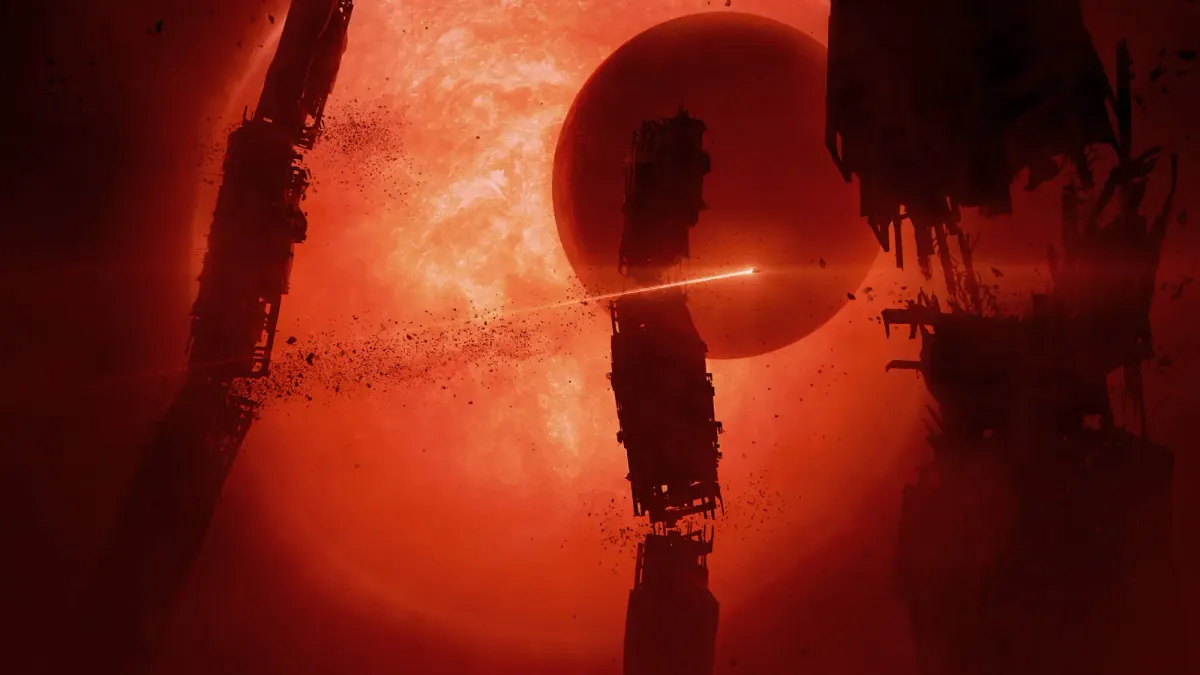
When Fenris Creations (formerly CCP Games) announced its research partnership with Google DeepMind, the details were thin.
At EVE Fanfest 2026, however, Fenris CEO Hilmar Veigar Pétursson filled in some of the gaps, and the picture that emerged is more ambitious and also more practical than the press release suggested.
Why EVE Online?
Hilmar’s pitch for why EVE Online is an interesting testbed for DeepMind's research is straightforward. The game is uniquely difficult for AI in ways that matter to the frontier of research.
It’s persistent. It’s player-driven. It demands long-term planning and continual learning across a population of thousands of concurrent players. Even after 23 years, Hilmar says he’s still discovering what EVE Online actually is, and that open-endedness is precisely what makes it valuable as a research environment.
DeepMind’s previous game-based research — AlphaGo, AlphaStar etc — tackled bounded competitive systems. EVE Online is something different: a sprawling, social, economic sandbox where behaviour is emergent rather than designed.
I will fix you
But not everything discussed was blue-sky research. Hilmar was candid about the more immediate benefits that AI is already delivering internally.
Fenris is working with a codebase, some of which is three decades old, where institutional context has been lost, and documentation is occasionally patchy. AI tools have already uncovered memory leaks and security vulnerabilities that had gone undetected for years.
It’s an unglamorous use case, but arguably one of the most impactful. Every long-running live service game faces the same challenge of maintaining ageing infrastructure, and Fenris is clearly finding practical value here.
On the game design side, Hilmar also acknowledged that EVE’s mission system is showing its age and could benefit from AI-driven improvement. The ambition is to use AI to make the game feel more alive, more responsive NPCs, more dynamic mission generation, a world that reacts to players rather than cycling through static content.
The plan is to develop and test these approaches within EVE Online’s controlled offline environments first, then extend the work to EVE Frontier, where Fenris is already experimenting with more radical ideas, particularly as related to blockchain, economics and the real-world value of in-game assets.
Why forgetting is important
The most thoughtful topics was around social AI. The core research question Hilmar posed: can you build an AI agent that collaborates with players in a way they find useful? Not a bot that farms resources or follows scripts, but something that participates meaningfully in EVE’s complex social fabric of alliances, betrayals, and collective decision-making.
This connects directly to what DeepMind is most interested in on its side of the partnership: memory, specifically, the problem of forgetting the right things. In AI research, this is known as catastrophic forgetting, a fundamental limitation where a neural network trained on a new task forgets the useful things it previously learned. It’s one of the deepest obstacles to building AI that genuinely improves over time rather than being retrained from scratch.
It’s also an area where DeepMind has serious pedigree. Raia Hadsell, VP of Research at DeepMind and co-lead of its Frontier AI unit, is one of the most cited researchers in the field. Her work on elastic weight consolidation, essentially protecting important learned parameters while still allowing new learning, laid much of the groundwork for what the industry now calls continual learning.
The challenge is particularly acute for an environment like EVE. An AI agent operating inside the game over months needs to remember market patterns, alliance shifts, and player behaviour, but also adapt when those things change. Remembering everything is as useless as remembering nothing. What you need is selective retention: knowing what to keep and what to let go. It’s actually closer to how human memory works than how most AI systems operate today, and EVE’s persistent, ever-shifting universe is a compelling place to test it.
DeepMind wants to build models where users interacting with the system also help the model learn, creating a feedback loop between player and AI, a living system that sharpens itself through play.
The bigger picture
In this way, what came across at Fanfest 2026 is that this partnership operates across two related paradigms that the two companies involved hope will eventually resolve to simultaneously solved states.
In the near term, AI is a practical tool for maintaining and improving a decades-old game, as well as potentially solving some of its key issues around building a dynamic world filled with millions of interesting players.
Meanwhile, in the longer term, EVE – initially the offline version of EVE Online, and then EVE Frontier – becomes a genuine research platform for some of the hardest problems in AI, including long-horizon planning, social reasoning, and dynamic memory driving coherent actions in a competitive system containing complex win conditions.
Whether that translates into a game that will live forever, a breakthrough in AI research, or both, is the question Fenris and DeepMind are now working to answer.