Notch's flip-flop week
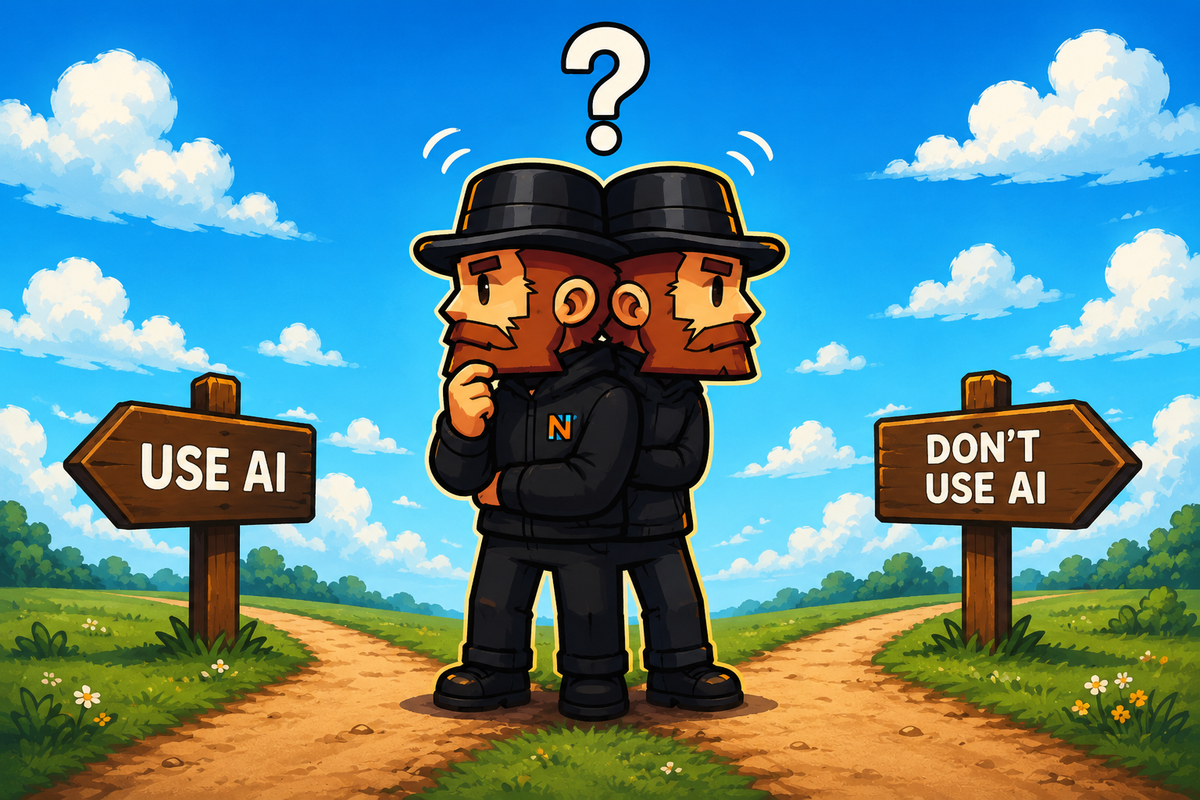
Minecraft creator Notch demonstrates the heart-head dilemma of AI.

On 14th July, Minecraft creator Markus 'Notch' Persson posted two words: “Reject AI.”
Even given Notch's recent reputation, it did the sort of numbers you'd expect: 5.2 million impressions, nearly 70,000 likes, over 5,600 retweets.
Ten days later, however, he was asking for vibe-coding tips.
“I just might give vibe coding a shot. Not because I don't like to do programming, but because I've been having a lot of trouble hiring talented programmers, and I'll probably feel less bad about firing a chat bot.”
He added that he was thinking of it for “the dull tools” he needs to build — not the creative core of the work, the scaffolding around it.
This is a completely different argument than the one usually made for AI coding tools. This isn't “AI writes better code than I do” or “AI makes me faster.” It's a labor-market complaint dressed up as a tooling decision.
Notch said he can't find programmers he trusts to hire, and a chatbot is easier to fire than a person. AI isn't winning an argument about capability here. It's winning by default, because the alternative isn't working.
The same day, he came back with the tone already softening under the weight of replies:
“Wow, that's a lot of replies with tips and suggestions on how to try vibe coding. I appreciate it! Still probably will be grumpy about it for a while, even if it is good, but who am I to resist the inevitable?”
By July 24, replying to a specific suggestion, the reluctance had thinned further: “I kind of want to give this vibe coding a chance as I got real close to becoming a luddite there.”
Read from start to finish, it's a clean four-post arc.
- flat rejection,
- reluctant reconsideration citing a concrete business problem,
- gratitude under a flood of unsolicited advice, and finally
- open curiosity...
Notably, nowhere does Notch claim AI is good. And there's an irony sitting in the replies. Underneath the July 21 post, programmers showed up offering to work.
Whether that's evidence the hiring market for indie game programmers is actually broken, or just evidence that cold-DMing a celebrity developer doesn't work as a job application, is left as an exercise for the reader.
What this isn't, yet, is a verdict. Notch hasn't posted a build, a result, or even confirmation he's started. If the story has a second act, it's whatever he actually ships with these tools for Levers and Chests, his current roguelike project, and whether the “dull tools” use case holds up against something closer to real production work.
It's also worth placing this against the noisier version of the same week's news cycle. As Notch was quietly working through his replies, AI coding accounts were pushing much bigger, much less verifiable claims — that the Kimi K3 open-weight model could one-shot a playable shooter for the cost of a coffee, no team, no months of work, no linked build to check any of it against.
Notch's arc is the opposite of that: small, checkable, dated, and driven by an ordinary business complaint rather than a benchmark screenshot. Unglamorous stories like this one are usually the more reliable signal of where the tools are actually at.
The working developer who didn't want to use them, is being pushed toward it anyway, one hiring headache at a time.