The gap between prompting a world in Minecraft and building one that works
Generative Design in Minecraft is a long-running academic competition to generate a working Minecraft settlement on an unknown map.

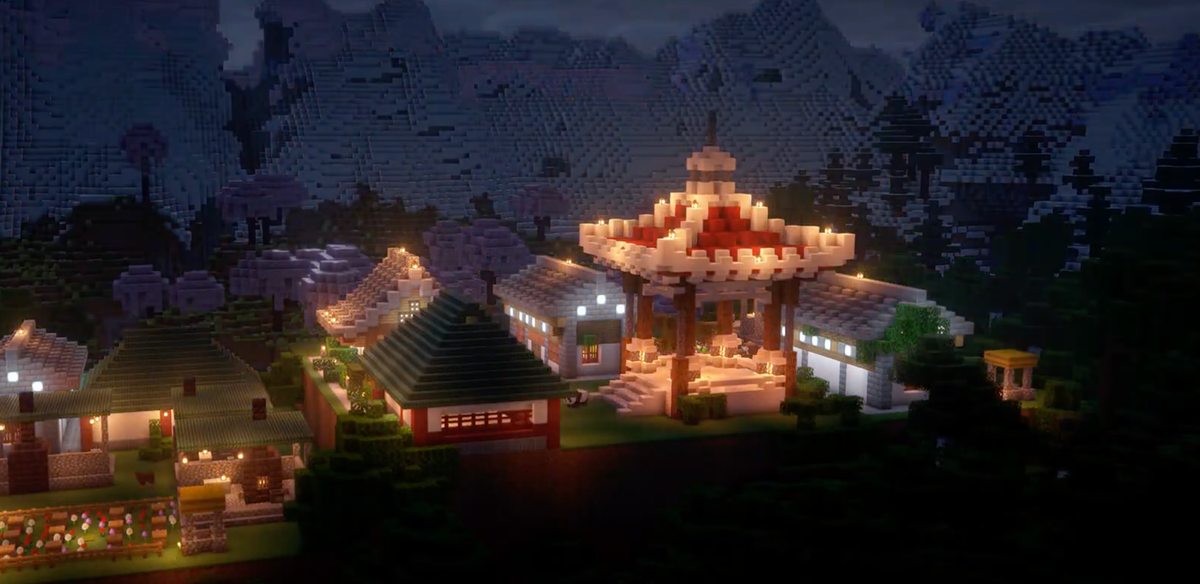
GDMC, short for Generative Design in Minecraft, is a long-running academic and hobbyist competition built around a deceptively simple challenge: write software that can generate a convincing Minecraft settlement on a map it has never seen before.
Organised by researchers at NYU, the University of Hertfordshire and Queen Mary University of London, the 2026 competition is currently open with a deadline of July 1st.
But entrants are not just making a nice-looking village in advance. Their systems have to inspect unfamiliar terrain, decide where and what to build, then place structures, paths and details automatically. The results are judged as playable spaces, not just as screenshots.
That makes GDMC a useful test case for the limits of large language models. At first glance, it sounds like exactly the sort of thing generative AI should transform. Ask an LLM for "a mountain village with a ruined watchtower, terraced farms and a local legend about a buried king" and it will produce something plausible in seconds. But GDMC is not asking for a description of a settlement. It is asking for the settlement itself.
That difference matters. Minecraft settlements are functional and spatial systems. A road has to connect to something. A door has to be reachable. A building has to sit properly on uneven ground. A bridge has to span the river rather than clip into it. A village that sounds coherent in prose can still collapse as an environment if the geometry fails. Human judges experience the output by moving through it, so the system must survive embodied inspection.
This is where LLMs struggle. They are strong at semantic coherence: theme, naming, backstory, explanation, mood. They are weaker at producing thousands of precise block placements that obey terrain, navigation, architectural and aesthetic constraints. A model can say "build houses along the river," but another system still has to identify the river, choose safe plots, orient buildings, handle slopes, create paths, avoid flooding and ensure the final settlement feels intentionally arranged.
For that reason, traditional procedural generation remains central. Constraint systems, pathfinding, grammars, terrain analysis, structure libraries, Wave Function Collapse and hand-authored rules are less glamorous than LLMs, but they are better at enforcing validity. They can guarantee that paths connect, houses fit, roofs align and the settlement is buildable. In a game, validity is not optional. A broken village is not rescued by a good prompt.
Where LLMs do fit naturally is around the edges of the system. They can generate lore, signs, books, place names, factions, social roles and local histories. They can act as high-level directors, deciding whether a given landscape should become a fishing village, fortress, monastery or trading post. They can help explain why a settlement exists and what kind of people might live there.
The best future architecture is probably hybrid. Let the LLM provide intention and narrative texture; let more deterministic procedural systems handle construction. The LLM supplies meaning. The generator supplies geometry.
That is why GDMC is so interesting in the post-Claude era. It exposes the gap between generating the idea of a world and generating a world that actually works. For games, that gap is remains crucial, at least for now.