Uthana is solving animation's last bottleneck, for now
Uthana's AI platform for human motion is a specialized solution for character animation. But does it have a moat?

Game development has been transformed by AI. Developers can vibe-code prototypes, generate concept art in seconds, and build 3D environments from text prompts.
But character animation has stubbornly resisted the revolution. It remains one of the most expensive, time-consuming, and skill-dependent parts of the pipeline.
This is the gap Uthana is targeting. Founded in 2022 by Viren Tellis and his brother Kethan, the LA-based startup has built proprietary AI models trained on high-fidelity motion capture data that understand how the human body actually moves in three dimensions — the joint rotations, weight transfers, foot contacts, and biomechanical constraints that separate convincing animation from uncanny puppetry.
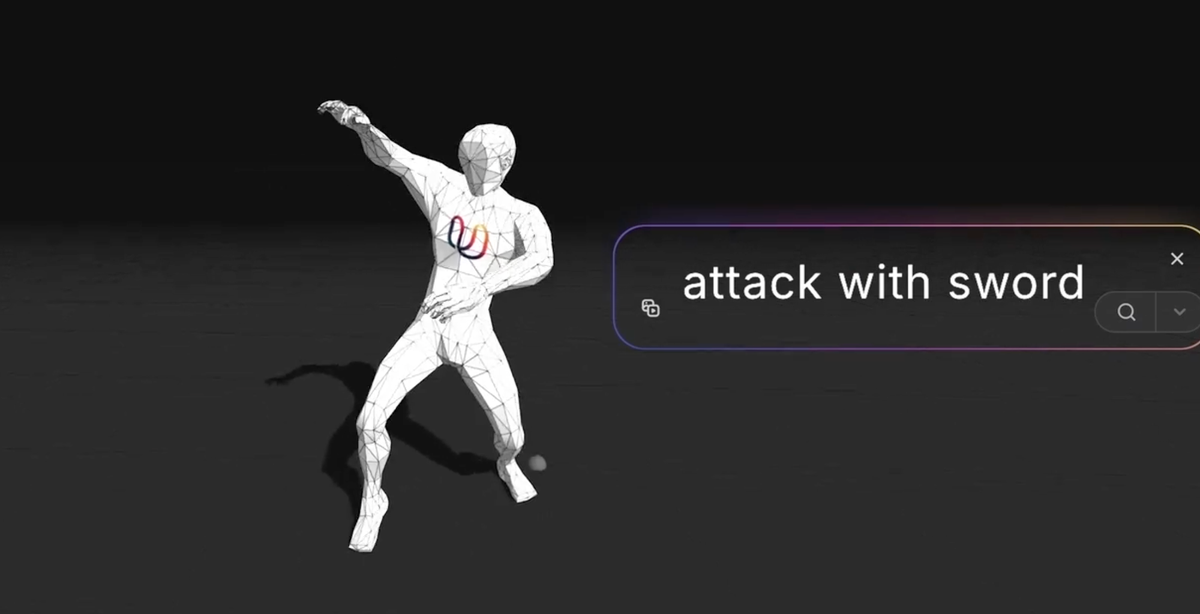
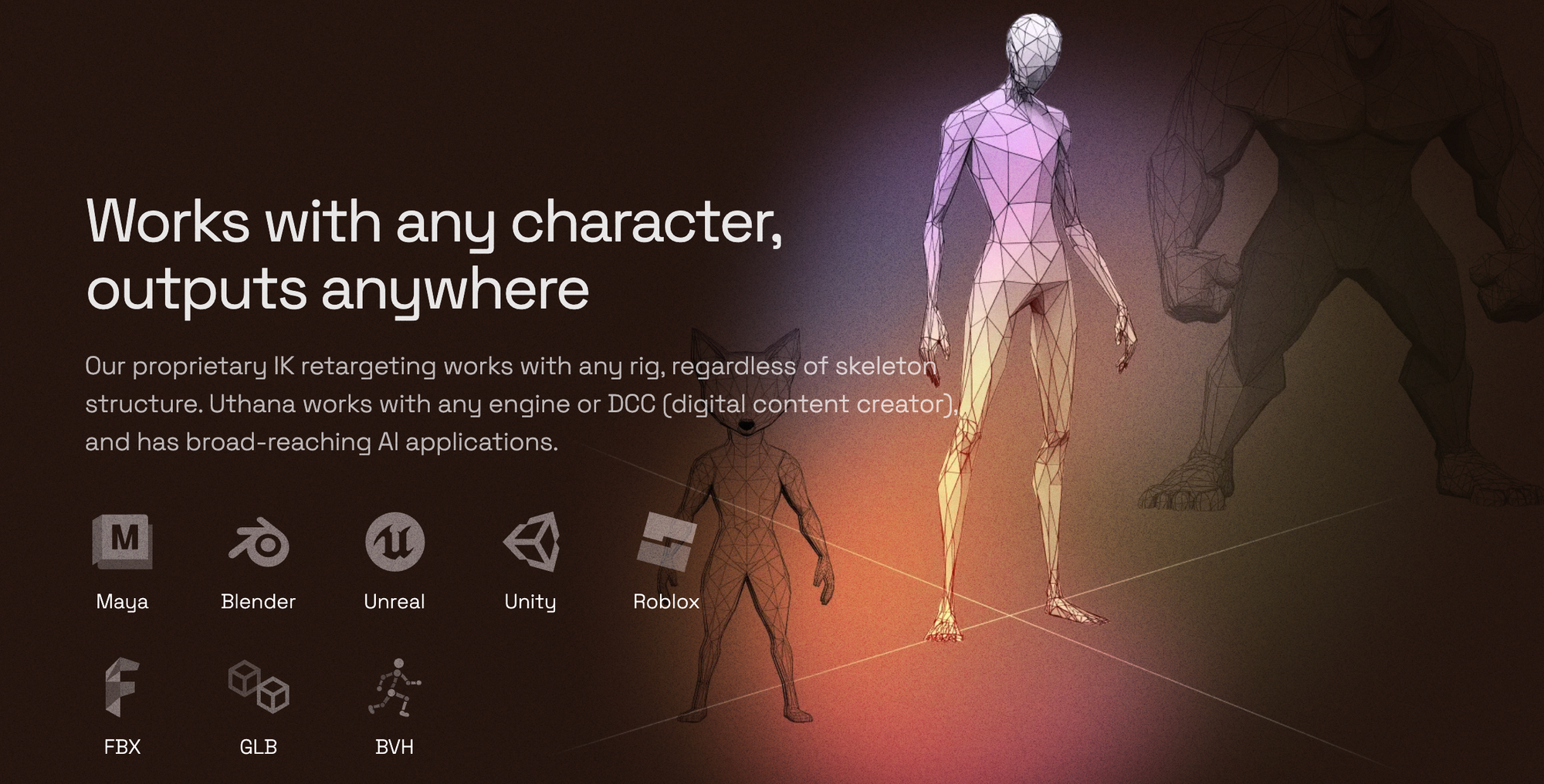
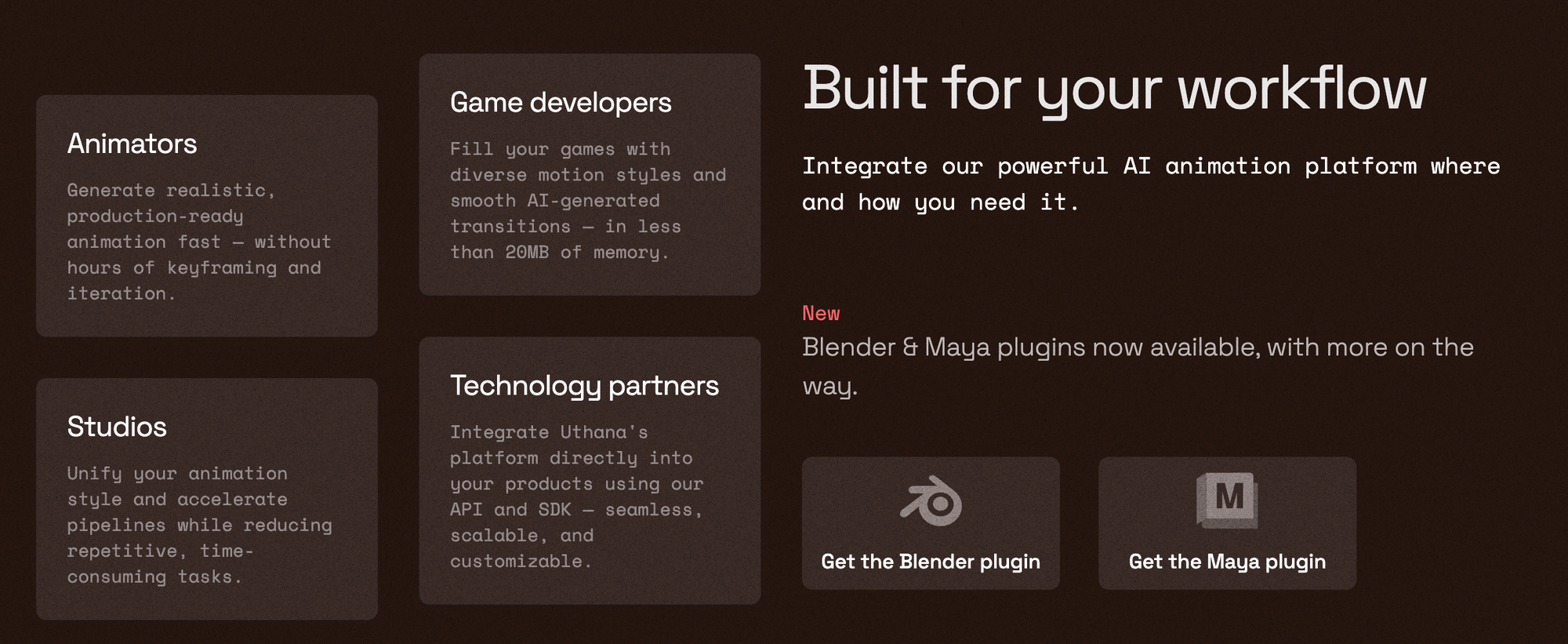
Their platform offers two core capabilities: text-to-motion, where a developer types a description and gets a production-ready animation in seconds, and video-to-motion, which extracts detailed skeletal movement from reference footage, including finger articulation. Both work across any bipedal character rig, removing another traditional friction point.
Supporting many pipelines, Uthana recently announced integration with Unity AI, which launched in open beta in May 2026, putting the tools directly inside the editor where millions of developers work. With $4.3 million raised from IA Ventures, a16z Speedrun and others, it's positioning itself as the motion layer in an increasingly AI-native development stack.
The value proposition is clearest for indie and mid-sized studios. A professional motion capture session costs tens of thousands of dollars before cleanup. Hand-keyed animation by a skilled animator takes days per clip. Uthana compresses both to seconds and pennies. For the vast majority of studios that can’t afford triple-A animation budgets, this is genuinely transformative. It means characters that move like they belong in a premium title, without the premium price tag.
But there’s an uncomfortable question hovering over the vertical AI animation space: how long does this advantage last?
Foundation model labs are advancing rapidly on video understanding, 3D reconstruction, and physics simulation. Google’s Genie 3, which rattled gaming stocks, demonstrates that major players are already thinking about generating interactive worlds end-to-end.
Once a frontier model can generate convincing video of a human moving and extract the underlying 3D skeletal data, which is an engineering challenge more than a research one, the specialised advantage of a purpose-built motion model narrows considerably.
The physics and biomechanics problem is real and hard, and general-purpose models still hallucinate impossible movement. Uthana’s curated mocap training data and proprietary IK retargeting gives it an edge today.
But the history of AI verticals suggests that specialised tools get absorbed by horizontal platforms once those platforms reach sufficient capability. Text-to-image startups learned this lesson when Midjourney and then the model providers themselves ate the market.
Uthana’s best strategic move, embedding inside Unity’s editor, is its best defence. If it can make itself indispensable to enough developers’ daily workflows before foundation models catch up, switching costs become the moat. The product advantage won’t last forever. The distribution advantage might.