Why Xbox's Copilot cut is not an Xbox AI retreat
New Xbox CEO Asha Sharma is killing Copilot, not AI.

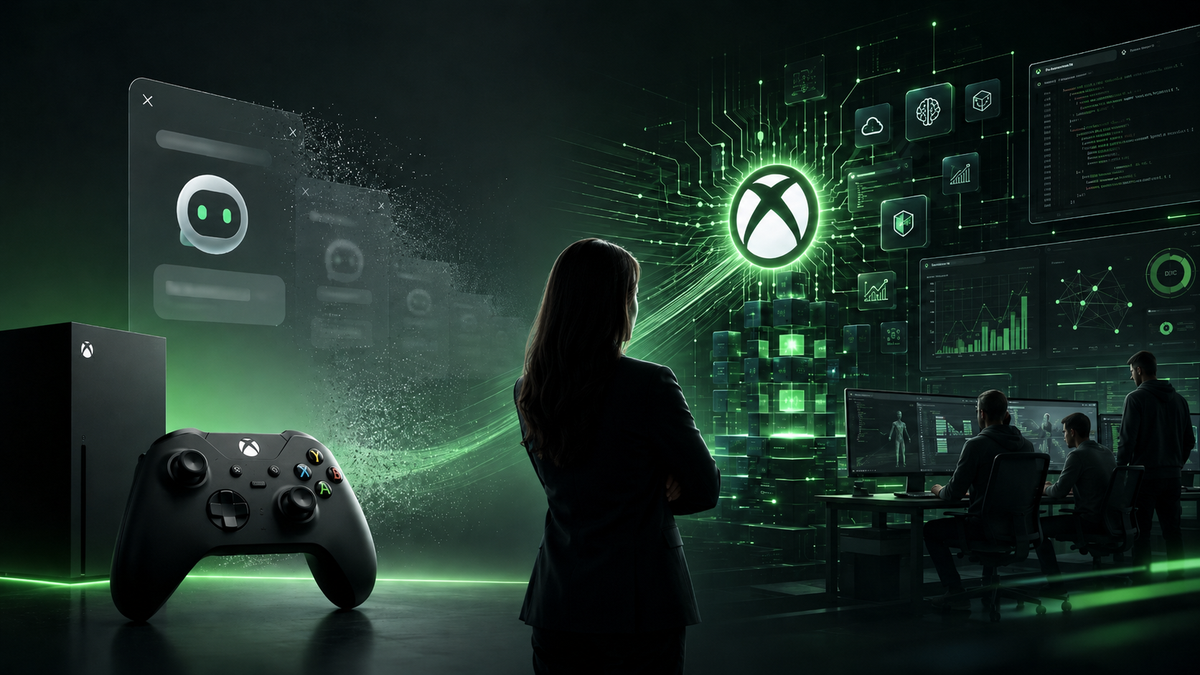
The most interesting thing about Xbox killing Gaming Copilot is that it is happening at exactly the same moment the company is importing more AI talent into the heart of the business.
On the surface, the decision could like a pullback. New Xbox CEO Asha Sharma has confirmed that Microsoft will wind down Copilot on mobile and stop development of the planned console version. That is a sharp reversal for a product Microsoft had only recently pitched as a "personal gaming sidekick" capable of giving gameplay help, recommendations, account information and achievement-aware guidance.
But the better reading is not that Xbox is becoming less interested in AI. It is that Xbox is becoming less interested in AI as a visible consumer brand.
This fits a wider Microsoft correction. Copilot has increasingly looked like a product strategy in search of too many surfaces: Windows, Office, Edge, mobile apps, gaming, search, screenshots, widgets, wherever Microsoft could find room for another AI button. Xbox was always one of the more awkward fits. Players may want better recommendations, smarter search, performance improvements, live help, moderation, accessibility and developer tools. They do not necessarily want a corporate chatbot sitting beside their game.
Sharma's positioning looks deliberate. After stepping up from a senior leader in Microsoft's CoreAI group to being named Xbox CEO in February, she has had to reassure a nervous Xbox community that the business is not being turned into another distribution channel for AI. Her public language has therefore been about retiring features that do not align with where Xbox is heading, moving faster, deepening community connection, and reducing friction for players and developers.
That is classic new-CEO behaviour. Kill something symbolic. Show discipline. Signal that inherited initiatives will not be protected just because they were once strategically fashionable. In that sense, cancelling Gaming Copilot is useful precisely because it is visible. It lets Sharma say: I am not here to spray AI branding over Xbox. I am here to make Xbox work better.
Yet the leadership changes tell the other half of the story.
- Jared Palmer, formerly CoreAI VP of product and GitHub SVP, is joining Xbox to work on engineering, developer tooling and infrastructure.
- Tim Allen, CoreAI VP of design and GitHub SVP of design and research, will lead design.
- Jonathan McKay, previously head of growth for ChatGPT at OpenAI, a director at Meta, and most recently head of growth at CoreAI, will lead growth, data platform and analytics.
- Evan Chaki, a CoreAI general manager, will run a forward-deployed engineering group focused on removing repetitive work and simplifying development.
AI is not leaving Xbox. It's just being pushed down the stack.
And this is a smart move. The strongest gaming AI use cases are not necessarily chatbots. They are real-time graphics enhancement, better discovery, deeper personalisation, developer tooling, automated testing, localisation, moderation, analytics and production support. Sharma has already framed Xbox's AI efforts around player problems such as real-time graphics, discovery and personalisation.
The cultural risk remains obvious. Gamers are rightly wary of AI slop, especially after years of layoffs, studio disruption and strategic confusion. Sharma and Matt Booty have therefore been careful to say there is no Microsoft directive forcing AI into game development, and that Xbox remains committed to human-made creative work.
In other words, the message is: less Copilot theatre, more invisible machinery. That's the right call. The failed version of AI in games is a chatbot that feels like Microsoft Office wandered into your living room.
The useful version is Xbox becoming faster, smarter, cheaper to operate and easier to build for, without players having to talk to Copilot at all.