A better ARCument for game AI

The games industry has not warmed to generative AI. In GDC’s 2026 State of the Game Industry report, 52% of respondents said generative AI is having a negative impact on the industry, up from 30% in 2025 and 18% in 2024.
Recent headlines have reinforced that mood: Phantom Blade Zero’s developers publicly said the game used no generative AI in its visual pipeline, while Crimson Desert’s developers apologized after AI-generated art made it into the final release. Even Take-Two, after talking up its AI ambitions, appears to have cut at least part of its dedicated AI group, including its head of AI.
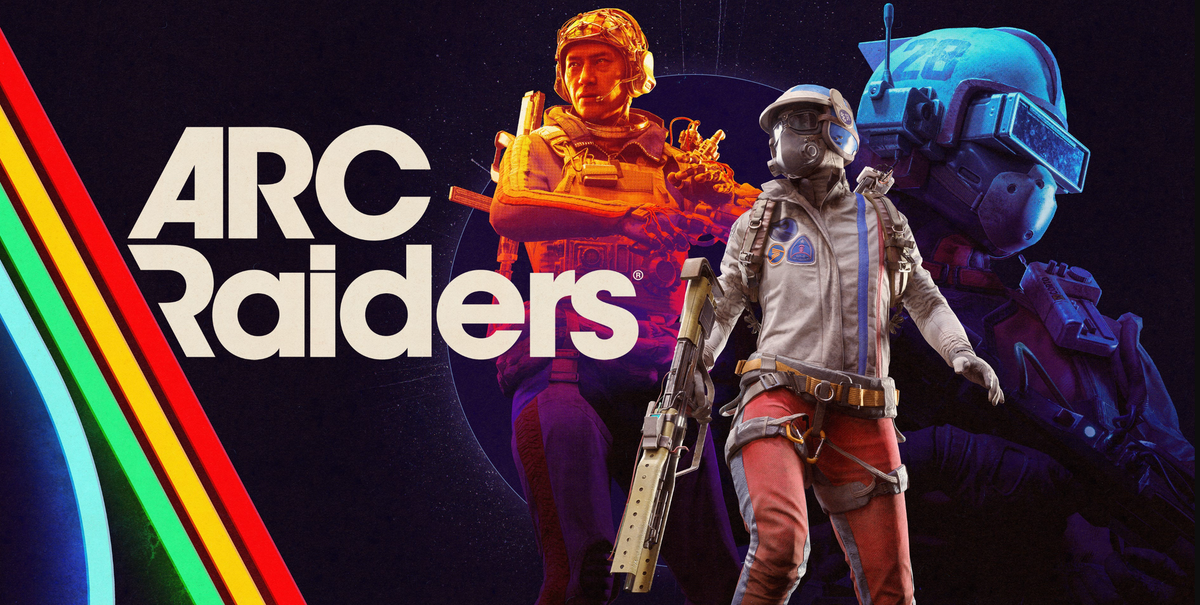
And then there is ARC Raiders.
Nexon says the PC/console extraction shooter sold more than 14 million units in its first 15 weeks, making it the most successful launch in the company’s history. CEO of its Swedish developer Embark, Patrick Söderlund has said the game and Embark’s broader production model were built at “a fraction of the cost” expected for a modern AAA project.
That does not prove AI made the game. It does suggest, however, that the current AI debate is often framed too crudely. The important question is not whether a studio uses AI at all. It is whether AI is being used to flatten human craft, or to remove friction so more human judgment can go into the parts that matter.
Embark was founded in Stockholm in 2018 by Söderlund and other veterans from DICE. Its founding premise was not “let the machine make the game”; it was that AAA development had become bloated, conservative, and structurally inefficient. Söderlund’s pitch has been consistent: studios inherited old toolsets, old pipelines, and old habits, then mistook those habits for necessity. In his account, Embark’s edge came from rebuilding production around better workflows, not from replacing artists with a prompt box.
That is why Söderlund’s most revealing quote is also the least fashionable one. “Very little of it is AI,” he said, arguing that the bigger gains came from rethinking pipelines. He specifically pointed to using topographical data, photogrammetry, and procedural techniques to accelerate environment creation and strip out what he called “boring work” — the repetitive labour that eats time without adding much creative value.
This is a more useful description of AI-era development than the usual utopian or apocalyptic framing. The point is not to automate taste. The point is to automate drudgery.
The part of the story that did trigger justified backlash was voice acting. ARC Raiders, like Embark's debut The Finals before it, used AI-assisted text-to-speech in some lines. Players heard that as a studio trying to save money by sidelining performers. Embark’s later response matters. Söderlund said the company pays actors for booth time, pays for approval to license voices for select text-to-speech uses, and has since re-recorded some lines with human actors because “a real professional actor is better than AI.”
He also said Embark uses AI “first and foremost as a production tool,” allowing the team to test many variants internally before deciding what should be recorded properly. That does not make the original criticism wrong. It does show the studio learned where audiences think the line is.
This distinction matters because too much of the anti-AI debate in games collapses everything into one bucket. ARC Raiders’ own Steam disclosure says the studio may use “procedural- and AI-based tools to assist with content creation,” while Embark’s public comments have insisted that the final player-facing experience is not built around generative AI art or writing. That still leaves room for criticism, especially around text-to-speech, but it is a different claim from saying the game was machine-written or machine-made.
There is also a business point here that should not be ignored. ARC Raiders was not just a hit; for Nexon it was a strategic one. In Nexon’s 2026 capital markets briefing, Söderlund said 85% of ARC Raiders’ 2025 revenue came from North America and Europe, and called it “the first real proof” that Nexon could build something that lands with a global audience. That matters because Nexon’s historical strength has been overwhelmingly Asian. ARC Raiders was therefore not merely a successful game; it was evidence that Embark’s smaller-team, smarter-tools model can travel.
That is also why Nexon keeps talking about Mono Lake. The company describes it not as a gimmick but as a functional initiative that applies AI to decades of internal context: billions of player sessions, live game telemetry, economy data, retention patterns, and design knowledge. In Nexon’s framing, Mono Lake is meant to give developers, live ops teams, and product decision-makers faster access to accumulated institutional memory. The official line is revealing: “AI without context is noise.” That is a much narrower and more credible ambition than the usual fantasy that generative AI will simply invent the future of games for us.
The lesson, then, is not that game developers should stop worrying about AI. They are right to worry about synthetic slop, about labour substitution dressed up as innovation, and about executives treating creative work as an avoidable cost.
But ARC Raiders does show a more serious path: use technology to compress waste, speed iteration, and widen the room for human decision-making. When Embark found that AI voices were worse, it used actors. When better pipelines could speed up environment building, it used them.
That is not “AI replaces game makers.” It is closer to “better tools make better use of game makers.”
The real question for the industry is not whether AI belongs in development. That question is obsolete. The real question is whether studios can distinguish between automation that cheapens a game and automation that gives talented teams more time to make one worth playing.