Better together: Ubisoft's AI Teammates

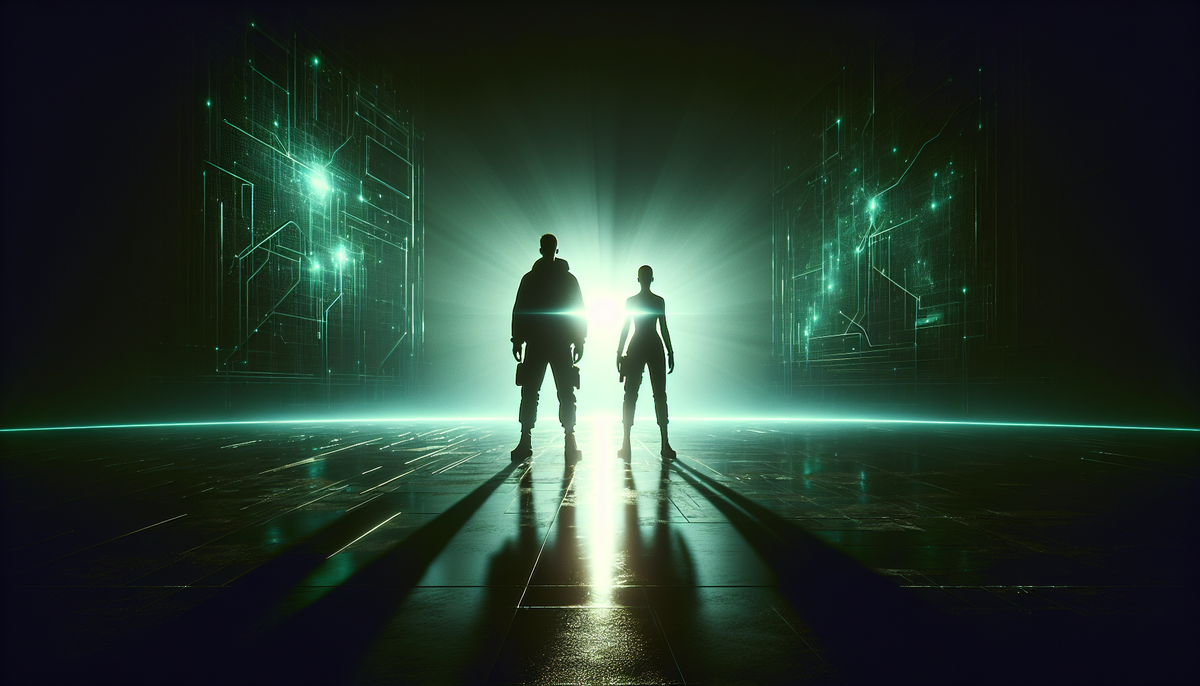
Ubisoft has spent years talking about generative AI. With Teammates, it is now showing what that looks like in a game. The project, formally a R&D experiment, is a first-person shooter in which players interact with three AI-powered NPCs using their voice.
It is the most concrete public demonstration of where Ubisoft's rumored 80-person generative AI team has been spending its time, and it arrives at a moment when the industry is watching closely to see whether AI NPCs can move beyond novelty.
How it works
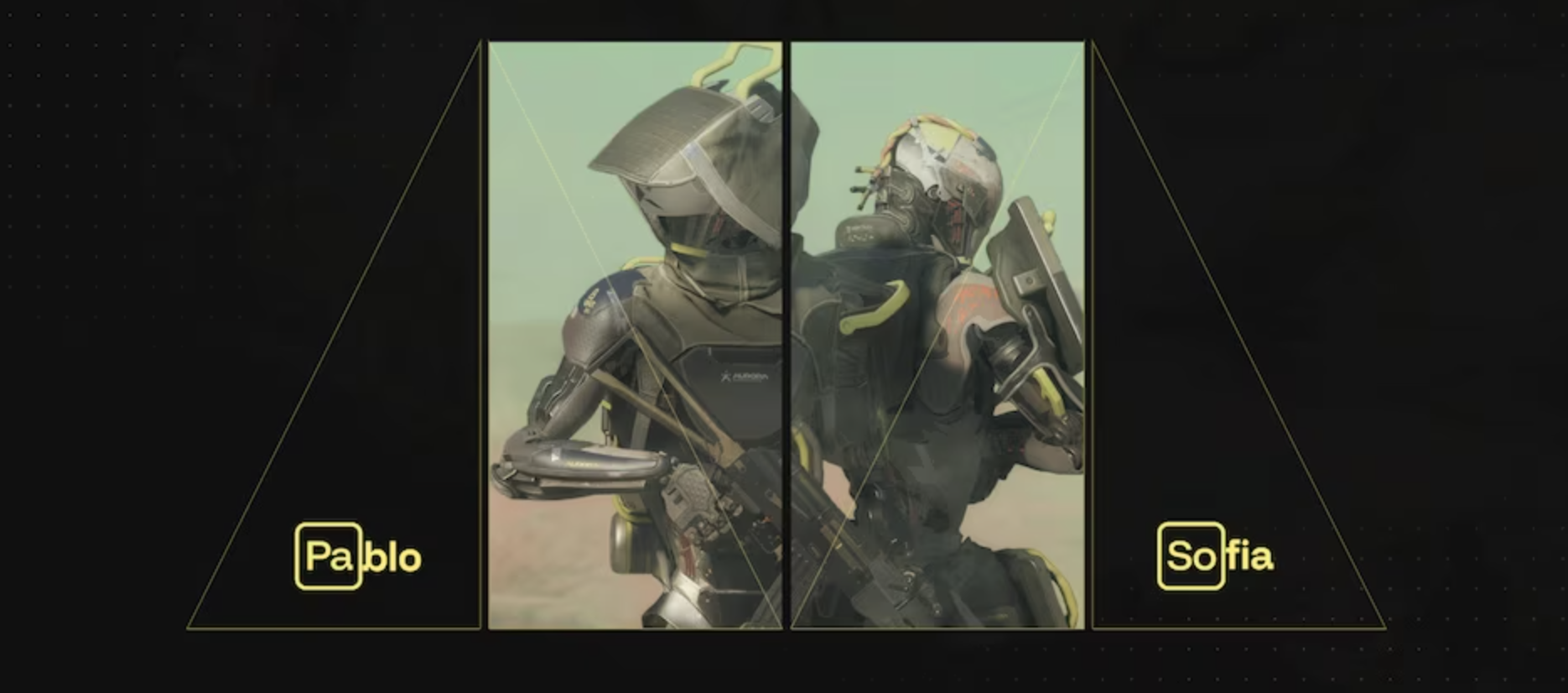
The three characters each serve a distinct function. Jaspar is a voice-activated HUD companion: players can ask it for tactical guidance, tweak accessibility settings mid-game, or just talk. Pablo and Sophia are combat and puzzle-solving allies who respond to contextual commands in the field.
The underlying system combines traditional behaviour trees with a large language model layer. As Xavier Manzanares, Ubisoft's director of generative AI gameplay, put it: "We use behaviour trees…and then we add a layer with our LLM to take decisions based on this."
The LLM layer means characters can interpret player intent, tone and environmental context rather than just matching keywords to scripted responses. According to Ubisoft's testing, the practical effect is players feel less like they are issuing commands piece-by-piece and more like they are leading a squad.
Modular by design
One of the more interesting technical decisions is that Teammates is not locked to a single AI model. Manzanares has been explicit that the platform is built to be swappable: "It's a modular platform, because we didn't want to be bound to one model or another."
Ubisoft is currently using Google Gemini. The project's link with Google DeepMind's Inception model will also be highlighted in a talk at the iicon conference in Las Vegas. But the architecture allows for OpenAI, Anthropic's Claude, or future models as the landscape evolves. That flexibility is telling. It suggests Ubisoft is thinking about this as long-term infrastructure rather than a one-model showcase.
Honest about the risks
However, what distinguishes Ubisoft's public communication on Teammates from most corporate AI announcements is a degree of candour about what can go wrong.
Manzanares has warned directly that without rigorous creative direction, the technology defaults to bland output: "It's a super cool tool, but it can do bad stuff…if we didn't do the work…it would just create generic content."
Indeed, his internal benchmark for whether voice interaction is worth implementing is "If this is something that could be done better with a controller, let's scrap it."
Narrative director Virginie Mosser has been similarly direct on the human side of the equation when it comes to transparency with voice actors, fair compensation, and a clear stake in ensuring emotional depth survives the process.
"I don't want my work being flat and cold," she said.
What it means?
Teammates is R&D, not a shipping product. Ubisoft has been careful not to overstate what it is. But it is the most developed public proof-of-concept from any major publisher on AI-driven NPCs, and the fact that it is playable matters. Most industry AI announcements stop at the concept stage, even if they get that far.
Hence, the question the project is really trying to answer is not whether it is technically impressive but whether generative AI makes players feel more engaged. That framing is what makes Teammates worth watching.
If Ubisoft can demonstrate that AI companions create genuine emotional investment rather than surface novelty, it changes the calculation for the rest of the industry.
Xavier Manzanares and Google DeepMind's Alexandre Moufarek present at iicon in Las Vegas today on the subject of Building Worlds That Think: What Happens When AI Serves the Creative Vision.