Game engines' AI adoption

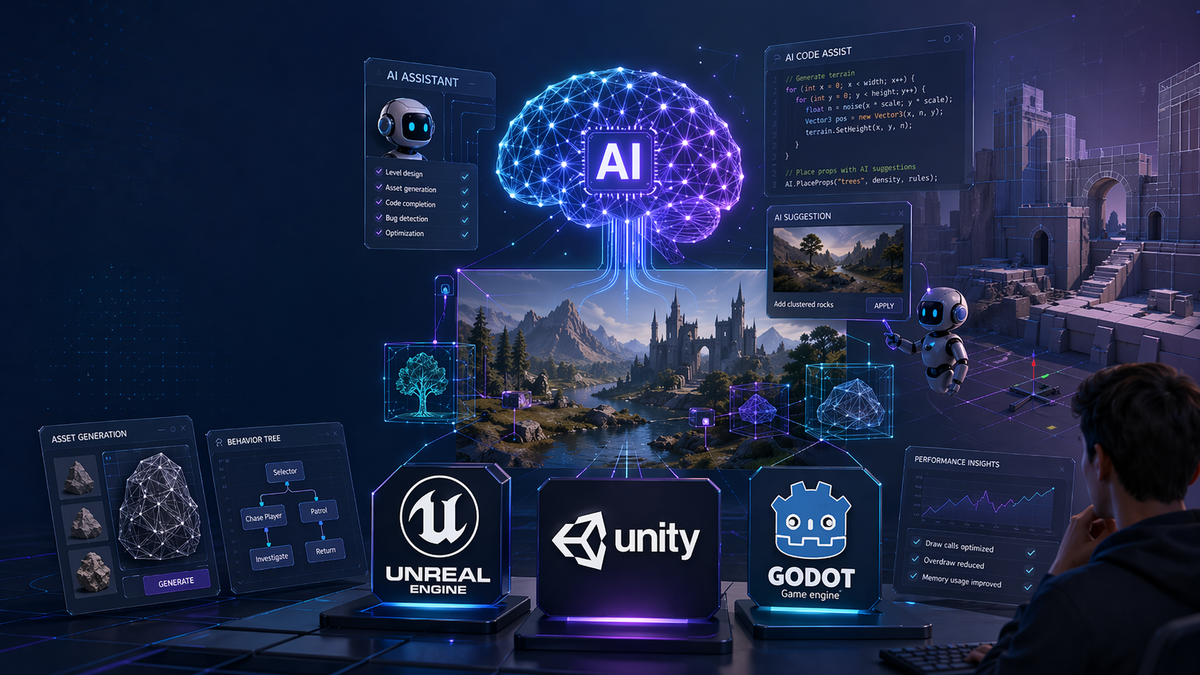
The rise of AI-assisted coding tools like Cursor and GitHub Copilot has already transformed how many developers write software. But what about game developers — and the specialized engines they rely on?
Unity, Unreal Engine, and Godot are all moving to embed AI directly into their workflows. Here's where each one stands.
Unity: a broader vision
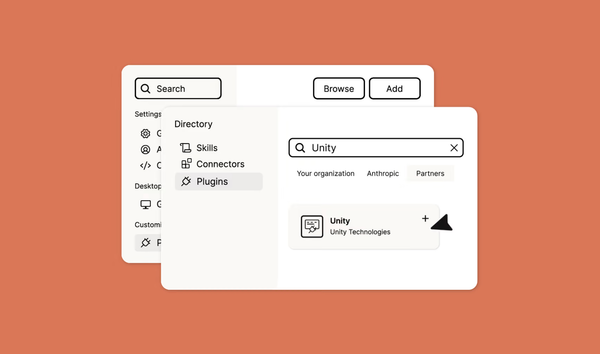
Unity has arguably made the most visible strategic shift. Earlier in 2026, the company retired its Unity Muse brand — the AI product launched in 2023 — and relaunched everything under a single umbrella called Unity AI.
Whereas Muse had been a standalone subscription product with its own interface, Unity AI is integrated directly into the editor and described as part of the core platform.
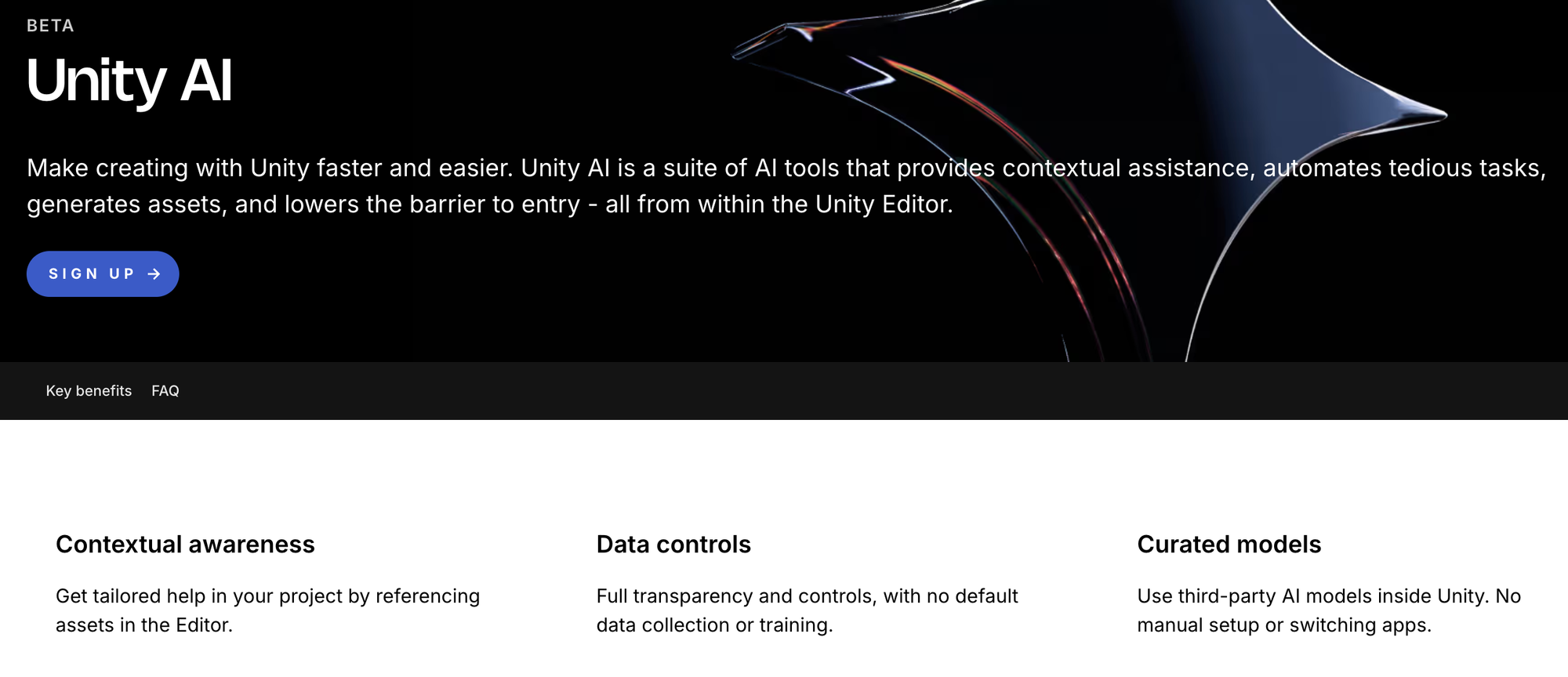
Unity AI comprises three main pillars. The Assistant is a conversational coding and debugging helper embedded in the editor. Ask it why your build is failing, request a script for a specific mechanic, or get an explanation of an unfamiliar API. It handles natural language queries and generates C# code in context. Importantly, Unity says the Assistant uses third-party frontier models rather than a bespoke Unity-trained model. Whether that's a pragmatic shortcut or a sign that Unity doesn't see model training as a core competency is an open question.
The second pillar, Generators, covers asset creation: sprites, textures, animations, and sounds can all be produced or iterated on through AI prompts. For indie developers without dedicated art pipelines, this is the most immediately practical capability. The third pillar, Sentis, is Unity's runtime inference engine. It lets developers ship AI models inside their games rather than calling external APIs. That opens up on-device NPC behavior, adaptive difficulty, and other gameplay applications that go well beyond coding assistance.
Unity AI is currently in beta, with pricing still being finalised. Given the rocky reception to the 2023 runtime fee debacle, how Unity prices this will be closely watched.
Unreal Engine's Assistant shift
Epic's approach has been more methodical. The company's AI bet, the Epic Developer Assistant, was quietly rolled out first for Fortnite's creator toolset, UEFN, and the Verse scripting language in mid-2025. It handled documentation queries, code suggestions, and error explanations within that constrained environment before Epic broadened the scope.
With Unreal Engine 5.7, the Developer Assistant became available as an experimental plugin for the full editor, covering Unreal Engine 5.7 documentation queries and C++ code generation. With 5.7, the assistant moved directly into the Unreal Editor itself, meaning developers can query the tool without leaving their environment. Early feedback from the community has focused on its usefulness for navigating UE5's notoriously complex API, where even experienced developers routinely lose time to documentation spelunking.
C++ assistance is particularly welcome given Unreal's reputation for a steep learning curve. Blueprint visual scripting lowered the barrier for designers, but serious performance-critical code still requires C++, and having an AI that understands Unreal-specific patterns (actor components, the gameplay framework, GAS) is meaningfully more useful than a generic coding assistant.
Third-party tools are also entering the Unreal ecosystem. Ramen VR's Aura is an AI assistant built specifically for Unreal developers, and the company also acquired Coplay, a Unity-focused AI tool, suggesting it sees an opportunity to serve both major engine communities.
Godot: surprisingly LLM-friendly
Godot doesn't have a corporate AI strategy in the way Unity and Epic do. As an open-source project, it depends on community contributions, but that hasn't stopped an active ecosystem of AI integrations from emerging.
Several MCP plugins have been developed that allow tools like Claude and other AI assistants to interface directly with the Godot editor. These plugins expose editor functions and project context to the model, enabling a developer to describe a feature in plain language and have the AI generate and sometimes directly apply the corresponding GDScript or C# code.
GDScript has an underappreciated advantage here. Its Python-like syntax is extremely readable, and the language is well-represented in LLM training data. Developers report that models like Claude and GPT produce reasonably accurate GDScript with minimal prompting, compared to the more verbose and idiosyncratic patterns required for Unreal's C++. For a solo developer or small team, this makes Godot plus a capable AI assistant a surprisingly competitive setup.
The tradeoff is that Godot's AI tooling is fragmented and requires more setup than the integrated approaches Unity and Epic are building. There's no single endorsed workflow, which means more experimentation and more flexibility.
The bigger picture
All three engines are converging on a similar vision: AI as a context-aware collaborator embedded in the development environment, not just a chat window bolted on the side. The differentiators are becoming the depth of engine-specific knowledge (does the AI actually understand how Unreal's subsystems relate to each other?), the quality of asset generation, and the runtime deployment story for shipping AI-powered gameplay.
For now, Unity has the most polished integrated experience; Unreal has the most technically demanding codebase that arguably benefits most from AI assistance; and Godot has the most accessible language for AI-assisted development with the most community-driven tooling. Which is best depends heavily on what you're building, and how much time you spend fighting your engine's own documentation.
One thing is clear: the days of AI in game development meaning only procedural content generation or NPC pathfinding are over. The AI is now in the IDE, writing the code alongside you.