Can you really "one-shot" Call of Duty?
What we know and don't know about Matt Shumer's Claude of Duty.

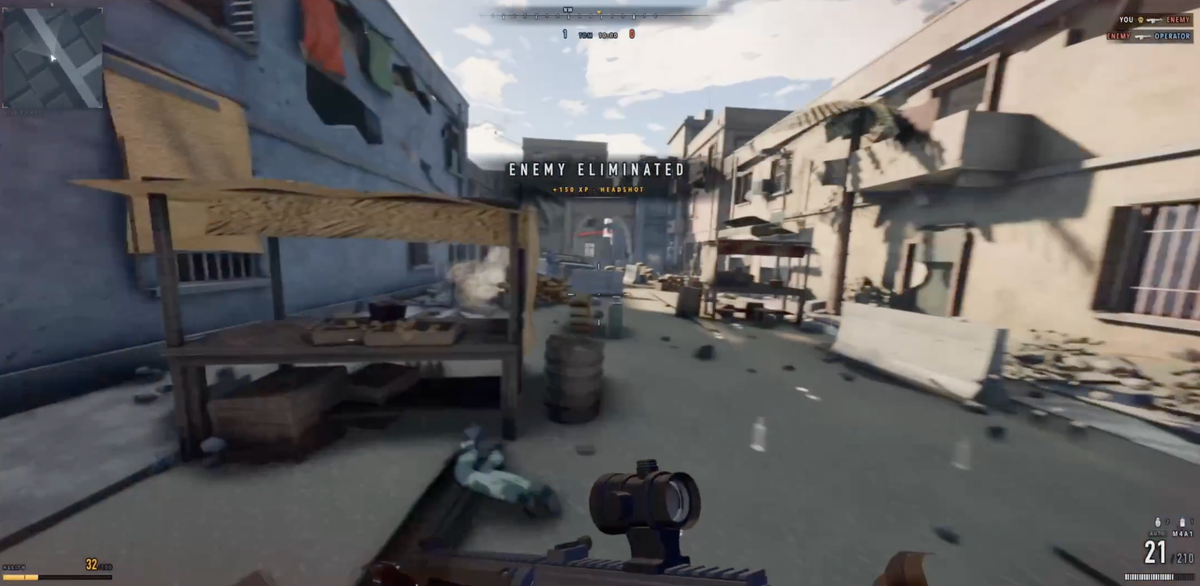
On 25th July, AI investor Matt Shumer posted a video claiming Claude Opus 5 had one-shotted a Call of Duty–style first-person shooter — every asset generated procedurally, no external art files, built from a single prompt.
But, unusually for a viral AI demo, Shumer also published the full source under the name Claude of Duty, which makes this one of the rare cases where the claim can actually be checked against the work.
What we know
The prompt really is short — about 130 words, published verbatim in the repo as prompt.md. It doesn't ask for a game so much as it asks for a process:
“Fan out sub-agents… /loop on each item and have a separate sub-agent check it visually… that separate sub-agent should be a really harsh critic… /loop until it's utterly perfect.”
So “one prompt” is technically accurate, but it launched an autonomous multi-agent build-critique-rebuild loop, not a single inference call. The repo itself is roughly 2.6 million bytes of JavaScript across two commits, both from 25th July, and the author describes it as “~55k lines across 11 subsystems, written by a fleet of AI agents under orchestration”, covering a custom renderer, hand-built physics, procedural materials, and fully synthesized audio with zero sound files.
What's genuinely notable is how self-critical the documentation is. Eleven adversarial critic agents scored the output against real Call of Duty footage across iterations: 3.59, then 4.14, then 4.05, then 5.05 out of 10.
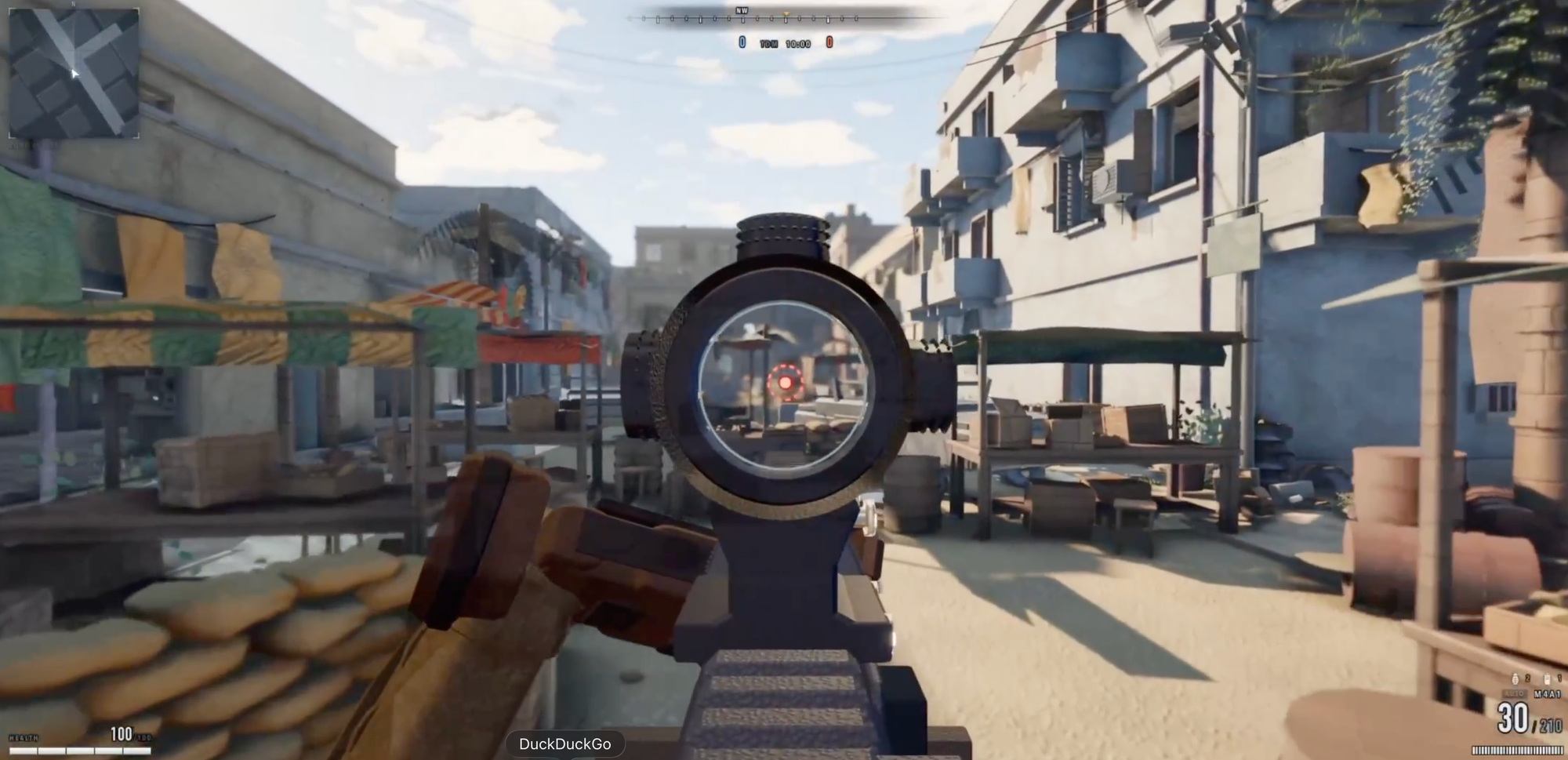
In blind side-by-side comparisons, every critic in every round picked the real game over the generated one. Only two of eleven benchmark shots reached “CLOSE”; the rest are rated “AMATEUR” in the project's own README. Named shortcomings include
- blocky hands,
- materials that “read as procedural noise rather than photographed reality” up close,
- mannequin-like characters at distance, and
- a frame rate of 28–30fps at Retina resolution.
One root-cause bug remains unfixed and disclosed: the weapon viewmodel is lit roughly 20 times brighter than the game world, forcing every weapon texture to be artificially dimmed to compensate.
There's also a real engineering finding buried in the writeup, not just hype: running agents in parallel (three rounds of six agents, each owning one directory) made quality worse, because lighting, sky, and tonemapping are a coupled system that isolated agents kept breaking.
Switching to sequential, single-owner passes reversed that. That's a checkable claim about the limits of multi-agent fan-out, which is more useful to game-dev readers than the demo itself.
What we don't know
Nobody involved has published a token count, API spend or wall-clock build time. That's a significant gap. The entire question of whether this represents a viable production technique or an expensive flex hinges on cost, and it's simply not in the public record.
A separate claim has since surfaced from Brad Wardell (founder of Stardock), who says he ran the identical prompt through “Opus 5 with Clairvoyance” and got “single shot, 120fps at 4k” — a dramatically better result than Shumer's own 28–30fps. But there's no repo, no benchmark methodology, and no cost figure attached to that claim either, so it can't currently be verified against anything.
We also don't know how much human intervention happened between agent loops; whether Shumer or anyone else nudged prompts, restarted failed runs, or curated which of multiple attempts became the published version. The README frames the process as autonomous, but “autonomous” claims in AI demos usually undersell the human steering involved, and there's no session log or timestamp trail to confirm otherwise.
Why it's still a good marker
Despite the gaps, this is one of the more honest data points available right now for “how good is AI game generation, really.”
Most viral AI-game demos are unverifiable video clips. This one shipped a working, playable, inspectable repo with its own harsh internal grading system attached — and that system says, in its own words, that it loses every blind comparison to a real triple-A game.
That's a far more useful signal than the triumphant framing of the original tweet: not “AI can build triple-A games now,” but “a single well-structured prompt can drive an agent swarm to a genuinely respectable amateur-tier FPS, with specific, nameable gaps that map cleanly onto where procedural generation currently tops out.”