Genie 4 lands with a shrug
Project Genie knocked 24% off Unity stock, but things have changed dramatically since then.

On 30th January, Google rolled out Project Genie and Unity stock closed down 24%, its worst single day since 2022. Roblox fell about 13%. Take-Two dropped 7.9% and CD Projekt 8.7%. Billions came off the sector in an afternoon because investors concluded that a model generating explorable worlds from text might make game engines less necessary.
On 27th October, Google DeepMind announced Genie 4, better, faster, and now with sound. Nothing happened to game stock.
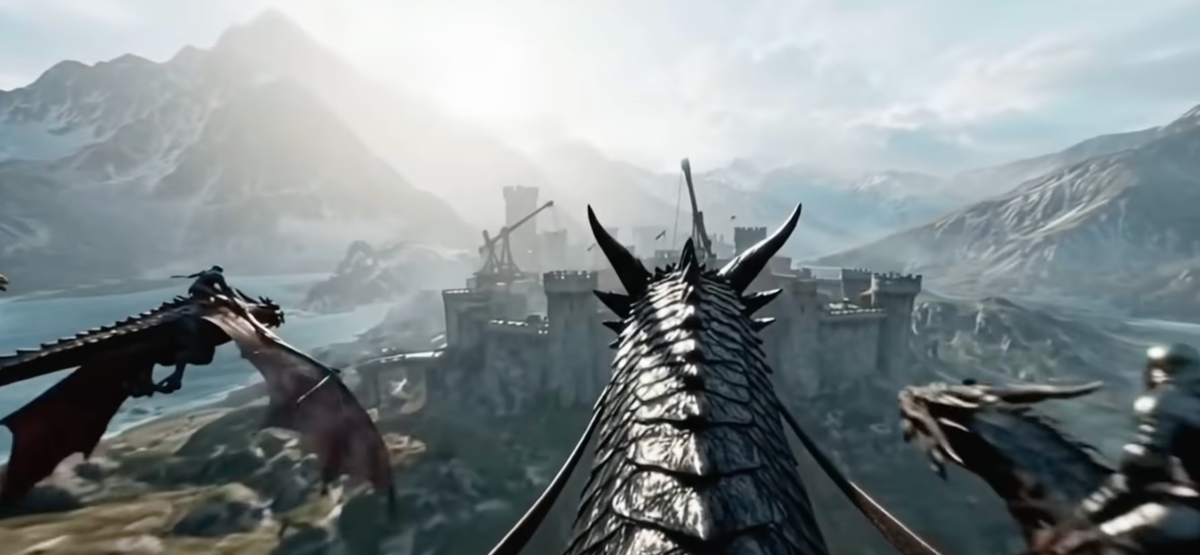
What Genie 4 does is real-time interactive simulation with "unprecedented realism and native audio". You start a scenario and steer it as it runs using plain language — move the camera, change the weather, drop in new characters mid-session.
Each world generates its own sound as it goes: ambient audio, music, and interactive dialogue. Underneath, Gemini Omni keeps the simulation grounded in how things actually look and behave, while other Gemini models supply the reasoning that holds continuity together.
The audio is a genuine advance. Generating interactive dialogue and music alongside a live world is harder than generating the pictures, and nobody else has shipped it.
The conversational steering matters too, because the reason generative video stayed a novelty was that you could never direct it. World Labs answered that in September with explicit camera poses. Google has answered it by letting you talk to the thing.
But what's really striking is how little else Google says. The announcement contains no session length, no resolution, no frame rate, no stated limitations, no safety detail, no benchmarks and no named quotes. Demos and adjectives. Set beside World Labs publishing self-reported win rates and benchmark comparisons for Atlas — thin as that was — this is thinner.
Which means the specifics circulating around it should be handled carefully. Roughly two-minute sessions against Genie 3's one minute, 24 frames per second at 720p, SynthID watermarking, a Gemini 3.8 Flash planner running in the loop, drift in object permanence and spatial accuracy over longer runs: none of that is in Google's post, and the resolution and frame rate figures trace back only to low-authority aggregators.
So why did a better version of the thing that erased a quarter of Unity's value land without a ripple?
The simplest answer is that Unity spent the nine months in between getting inside the tent. In September it shipped an official first-party plugin for Claude Code, with 29 Unity-authored skills and live editor control, on the explicit reasoning that developers now start by describing a game to an agent and the agent picks the engine for them. Then on 7th October it announced Unity Spark, a prompt-based creation layer built exclusively for Google's Playground platform. Unity's shares rose 4% on that news.
The company that lost a quarter of its value to Genie in January is now Google's distribution partner. When Genie 4 arrived this week, the obvious party to panic was already on the other side of the table.
The second answer is that the people who said January was an overreaction were right. Wells Fargo called the sell-off overblown at the time; mBank's Piotr Poniatowski called it unjustified. Unityshares clawed back at least 3% of the loss by the following Monday. And CEO Matt Bromberg's argument has aged well: the frames these models produce are probabilistic, which makes the output unsuitable on its own for games that require consistent, repeatable player experiences.
A world that regenerates slightly differently each time you walk through it is a remarkable toy and a hopeless foundation for a product people are meant to replay.
The third is economic. Real-time world generation is extraordinarily compute-hungry, which is why sessions are capped in minutes and why Genie 4 arrives for trusted testers, then Google AI Ultra subscribers through Project Genie, then early access partners via the Gemini API. It remains a premium, rationed experience. Nothing about the pricing structure suggests a technology about to displace finished commercial games, and the market appears to have worked that out.
Worth noting where Google itself points the thing, though, because it is not at games. The announcement frames world simulation as a step toward AGI, and the first use case it reaches for is safe training environments for robots and agents, ahead of filmmaking, journalism, gaming and manufacturing.
That is the same argument DeepMind made when it published the paper in which four Gemini agents beat Minecraft, and the same reasoning behind running SIMA 2 inside EVE Online with Fenris Creations. Simulated worlds as somewhere to train agents, not somewhere to sell entertainment.
It also means Google now holds three surfaces where its competitors hold one.
- Project Genie for AI Ultra consumers,
- Playground with Unity Spark underneath it for prompt-based creation, and
- the Gemini API for developers.
That stack was assembled in nine months, and the engine company that was supposed to be its first casualty is now a component inside it.
But two cautions before concluding the panic was simply wrong. The absence of a reported market move is inferred from the absence of coverage, not from confirmed flat trading. And the comparison is not quite like-for-like: January was a consumer rollout people could see, while this is a research preview gated behind trusted testers. A quieter reception may reflect a quieter launch rather than a wiser market.
But the direction is hard to miss. The first Genie arrived as a threat to an industry that had no answer. The second arrived into an industry that had spent nine months rearranging itself so that Google's world model would show up as a partner rather than a predator. Whether that counts as adaptation or capture rather depends on who you ask, and on what Unity's deal looks like when the exclusivity runs out.