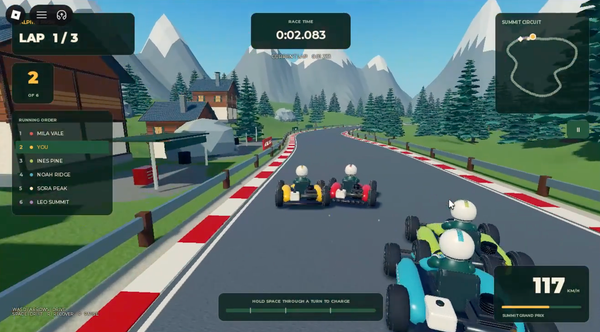
PixVerse R1 shows why world models are exciting but not yet game engines
PixVerse's R1 world model is another example of the current limitations of the AI-to-game-engine thesis.

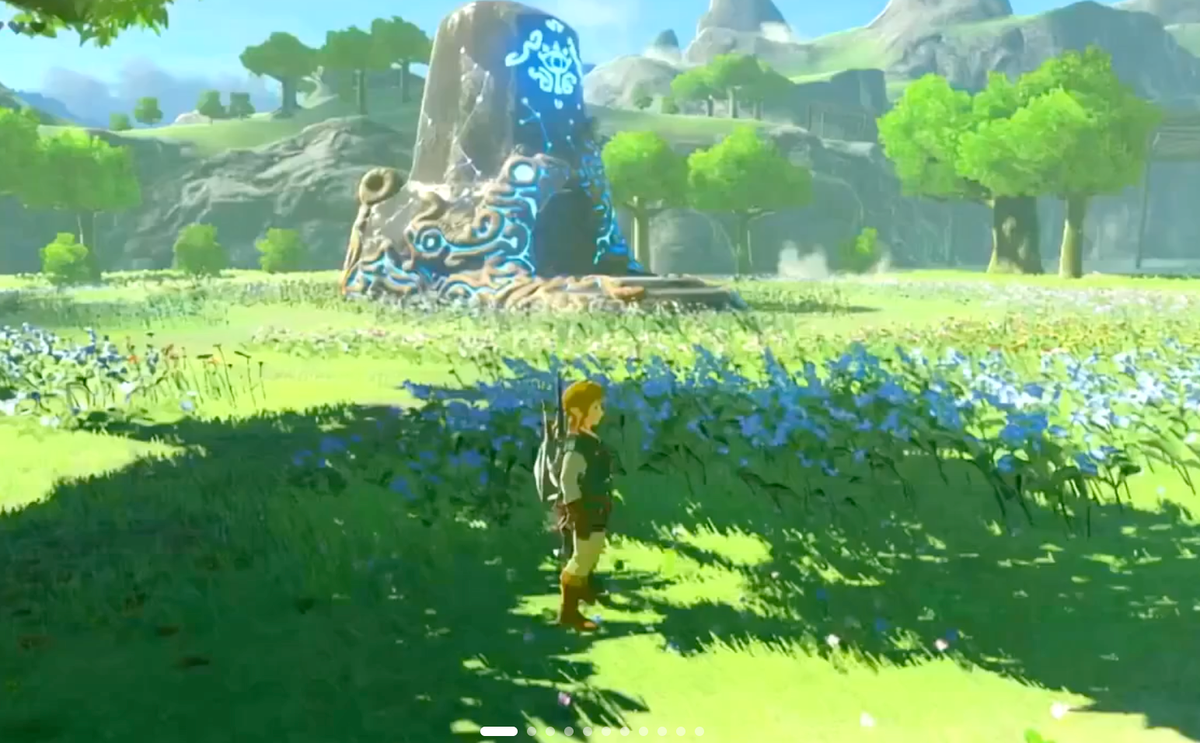
PixVerse R1 arrives at an important moment for generative 3D video. The field is moving beyond models that produce short, fixed clips and toward systems that generate a world continuously, accept user input while running and predict what should happen next.
Google DeepMind’s Genie 3, Runway’s GWM-1, Decart’s Oasis and open research projects such as Matrix-Game all pursue versions of the same idea: replace a conventionally rendered environment with video generated frame by frame by an AI model.
R1 is interesting because Chinese outfit PixVerse is attempting to turn that research direction into an accessible product. Rather than producing a ten-second MP4 from a prompt, R1 creates an audiovisual stream that can continue evolving while the user steers it.
PixVerse says the system combines native multimodal processing, autoregressive generation with memory and an “instantaneous response engine” designed to reduce the number of generation steps. The current partner offering supports 720p output, synchronized audio, natural-language scene manipulation and continuous sessions of up to 300 seconds. PixVerse has also demonstrated shared worlds in which multiple participants can influence the same generated environment.
This places R1 in a different category from the normal PixVerse app, including its own V-Series models and use of third-party models such as Seedance. Those tools are designed to manufacture viral video assets. R1 is designed to make the video itself into the interface.

The wider field suggests this is not a fringe idea. Genie 3 generates explorable 720p worlds at 20–24 frames per second and is intended partly as a training environment for AI agents.
Runway’s GWM-1 similarly generates frame by frame and accepts controls including camera movement, audio and robot commands. Matrix-Game 3.0 claims 720p generation at up to 40 FPS with memory stability over minute-long sequences, and publishes considerably more technical detail than PixVerse, including model sizes and elements of its training and inference pipeline.
These systems are converging on the same basic architecture. A video model predicts the next frames based on previous frames and an action: move forward, turn left, open a door, alter the weather or make a character speak.
In principle, this removes the need for developers to model, texture and animate every possible environment in advance. A player could ask for a haunted city, walk into an apparently unplanned building and encounter a situation generated in response to their behavior.
R1’s particular advantage may be productization rather than proven model superiority. PixVerse already operates a large consumer video platform and can place R1 in front of ordinary users rather than restricting it to an academic demonstration. Integrated audio and natural-language steering also suit interactive stories, livestreams, AI characters and shared social spaces, where precise keyboard control is less important than the ability to reshape a scene conversationally.
However, current evidence does not support treating R1 as anything close to being a replacement for Unity or Unreal Engine. PixVerse’s API materials explicitly state that applications requiring less than one second of latency are not supported. That is far too slow for shooters, racing games, platformers or competitive multiplayer, where responses need to feel effectively immediate. “Real-time” here primarily means that the stream keeps generating, not that every user input produces a game-engine-speed reaction.
Persistence is another problem. PixVerse acknowledges that small prediction errors can accumulate, causing objects, scene geometry and physical behavior to drift over longer sessions. An autoregressive model can continue generating indefinitely without maintaining an indefinitely coherent world. A door may move, a character’s appearance may change or a previously visited location may not be reconstructed correctly.
There is also little independent evidence by which to judge R1. PixVerse has not published its parameter count, hardware requirements, measured frame rate, prompt-response latency, inference cost, training data or controlled comparisons.
R1 is absent from WorldMark, a new benchmark that evaluates interactive models using common scenes and action sequences across visual quality, control alignment and world consistency. Researchers surveying the field identify precisely these areas—responsiveness, action adherence and long-horizon memory—as its central unresolved problems.
The likely near-term role for R1 is therefore narrower but still valuable. It can act as a generative visual layer around conventional software that continues to hold the authoritative game state: inventory, health, objectives, rules and player position. That would allow AI to improvise the appearance and presentation of a world without trusting it to enforce the mechanics.
R1 should be viewed as credible early interactive-video technology with substantial commercial optionality. It demonstrates why world models could change games and digital entertainment, but also how far continuous generative video remains from becoming a dependable general-purpose simulation.