Roblox Studio goes agentic

Among Roblox's top 1,000 creators, 44% are already using AI to build games. This is either through Roblox's own Assistant or third-party tools connected via the MCP open standard.
And now Roblox is betting that agentic workflows , which is when AI plans, executes, and tests autonomously, will become the default way its games get made.
On April 15, Roblox announced a suite of agentic features for Roblox Studio, its game creation environment. The features are rolling out incrementally. Some are live now, others are in beta or on the near-term roadmap. But together they transform Roblox Assistant from a single-prompt tool into a multi-step development partner that can plan projects, generate assets, and playtest builds with minimal human intervention.
From prompt to design
The centrepiece is an improved Planning Mode. Rather than firing off a prompt and hoping the output is good, creators work with Assistant through a structured back-and-forth. The agent analyses the game's existing code and data model, asks clarifying questions, and produces a detailed, editable action plan before writing a single line of code.
That plan functions as a lightweight game design document, a manifest of tasks with enough context that multiple agents can execute work in parallel and check their output against the creator's original intent. Roblox says persistent context across sessions is coming shortly after launch, which would let the agent accumulate project knowledge over time rather than starting cold each conversation.
Mesh generation, procedural models
On the asset creation side, Mesh Generation is already live, building on Roblox's Cube foundation model, which introduced 4D generation earlier in 2026. Creators can add textured 3D meshes to the game world directly from text prompts.
Not yet available but coming soon is a Procedural Model system: code-controlled models with customisable attributes (number of shelves on a bookcase, chairs around a table etc) that can be generated from text or image prompts and then adjusted dynamically. These are reusable, parametric building blocks, closer to how professional game studios handle environment art than the static asset placement typical of user-generated content platforms.
Automated QA agent
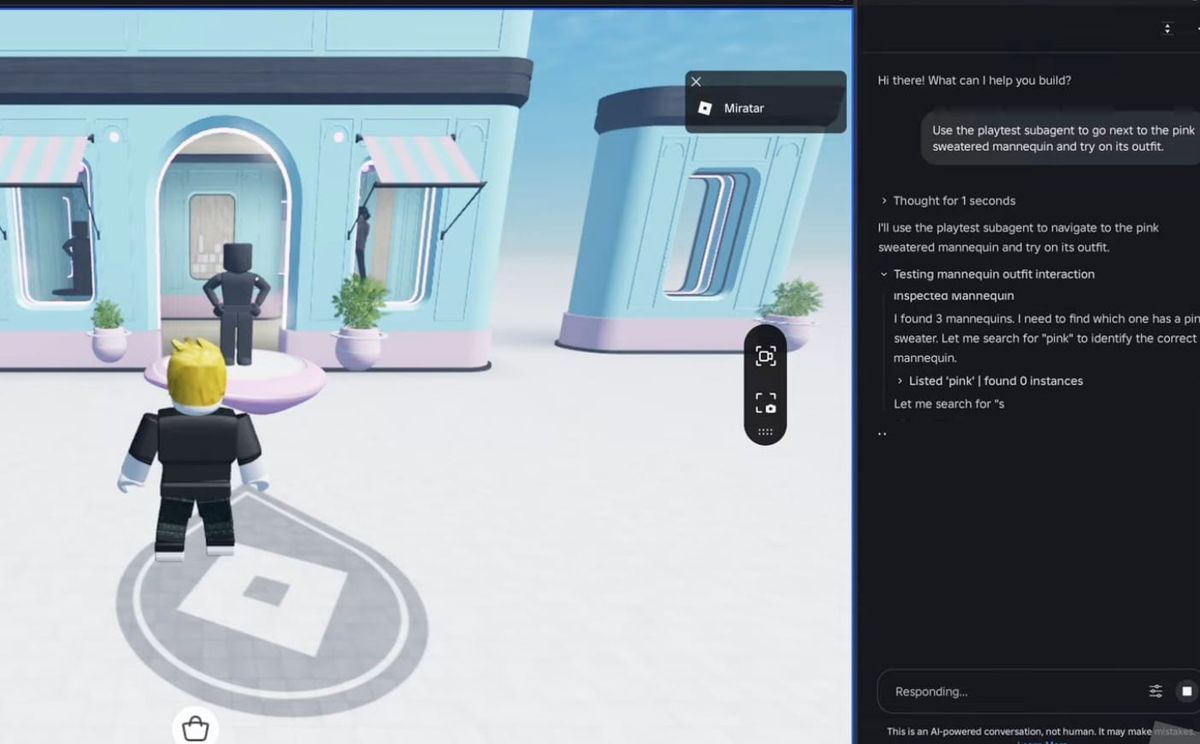
The announcement's most forward-looking feature is a playtesting agent, currently in beta. The agent reads the game's code, analyses logs, and controls a player character to navigate the world and verify behaviour against the original plan.
It functions as an automated QA tester, identifying bugs, surfacing suggested fixes, and feeding results back into future planning loops to create what Roblox describes as a self-correcting development cycle.
One creator quoted in the announcement, Malt of Solo Hunters, captures the aspiration: community members surface bugs or feature requests, the AI system reviews and completes tasks overnight, and the developer wakes up to a set of pull requests ready for review.
Open architecture
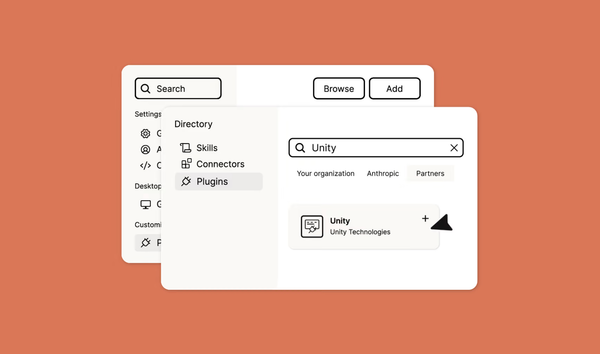
Notably, Roblox is not trying to lock creators into its own AI stack. Studio's built-in MCP (Model Context Protocol) server is already live, exposing project context through unprivileged APIs and allowing third-party tools such as Claude, Cursor, and Codex, to plug directly into the development environment.
Developers have already been using it to connect external agents to Studio, with one widely shared experiment using OpenAI's Codex CLI via MCP to build a complete playable game from scratch in thirty minutes.
Further out on the roadmap are parallel agent execution; long-running cloud agent workflows for complex tasks; smarter NPC behaviour simulation; and a node graph for visualising AI workflows.
What it means
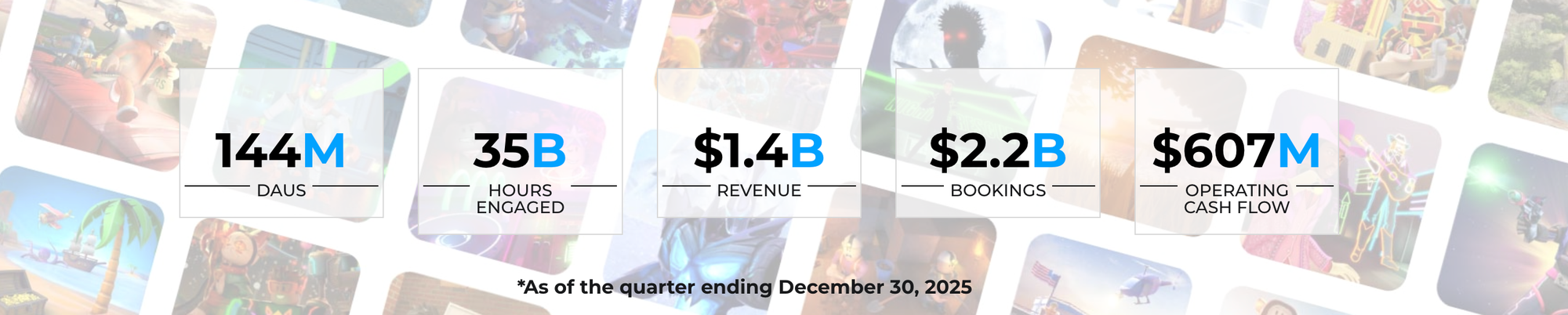
Roblox currently claims more than 14 million creators, with daily active users reaching 144 million in Q4 2025 and full-year revenue in 2025 of $4.9 billion.
This makes this deployment of AI the largest adoption attempt in games to-date, a sector that currently has a complex relationship with the disruptive technology.
And that's the irony. While professional developers are debating where and where not to use AI, Roblox developers have access to the technology built directly into the platform.
So it will be fascinating to see if this initiative is swept away in a flood of slop or whether Roblox's public quarterly financials highlight a new commercial edge, unlocked by enabling everyone to make games.