AI gaming's 8% problem
A new GameDiscoverCo survey of 3,800 core Steam fans finds only 8% would refuse to buy an AI-disclosed game.


The dominant narrative about AI in games is that players have turned decisively against it. Any whiff of AI-generated art or dialogue is enough to sink a launch. Even disclosing AI coding raises eyebrows.
But a new survey from GameDiscoverCo suggests that narrative is mostly an artifact of who's shouting, not what most buyers actually think.
GameDiscoverCo surveyed roughly 3,800 "core Steam fans" — recruited via giveaway, so skewed toward the most engaged, most opinionated end of the player base — on their attitudes toward AI disclosure.
This is, in other words, exactly the demographic most exposed to the anti-AI discourse and most likely to act on it. And yet, only 8% said they would never buy a game that disclosed AI use.
Another 23% leaned negative without ruling out a purchase. 26% were neutral. 43% reported no significant concern at all.
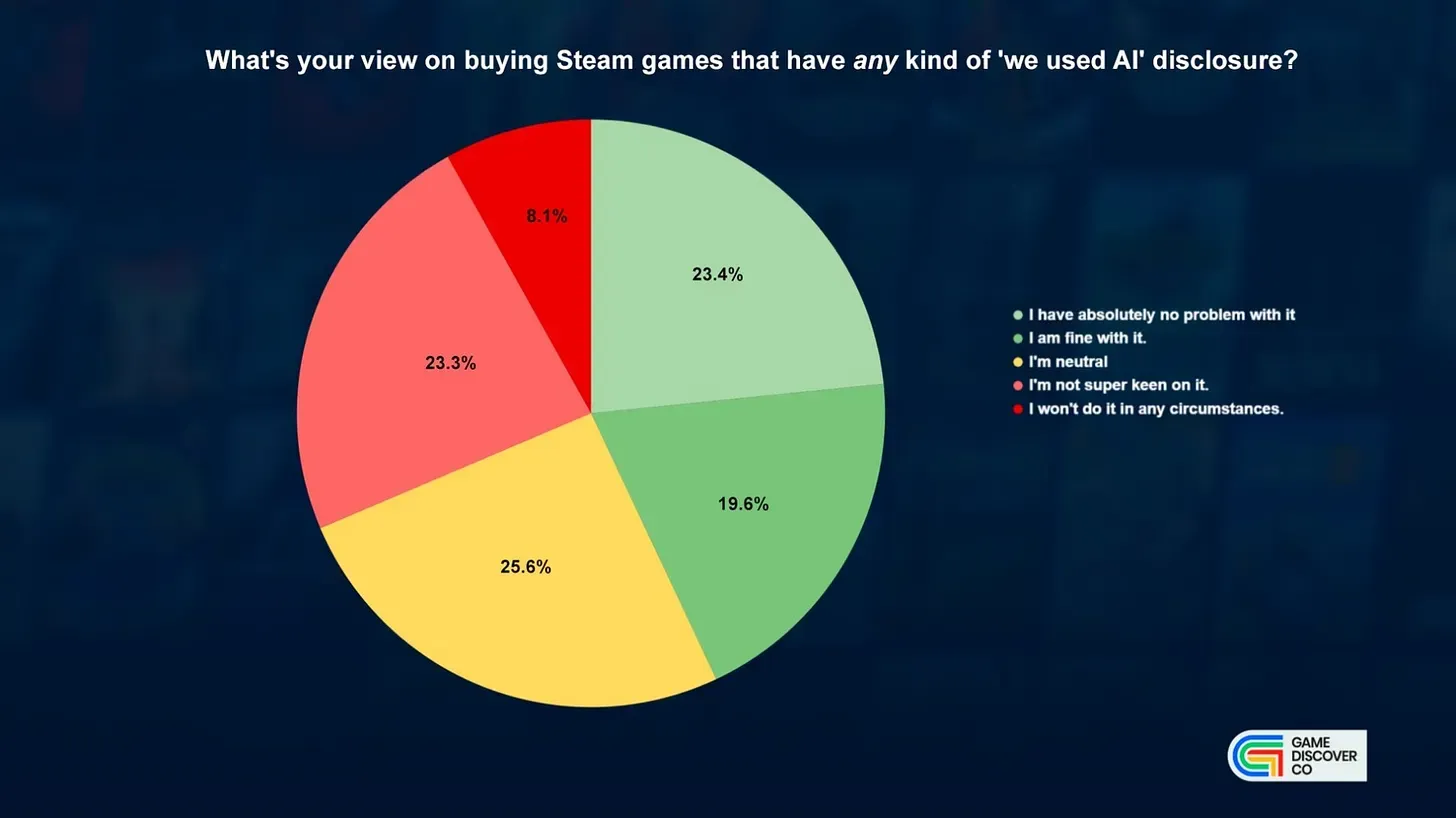
That 8% figure is the headline, though. They might be a small, highly vocal minority, but AI refusniks do not reflect the broad sentiment among people who actually spend money on Steam.
Two other numbers from the same survey explain why that minority feels so much larger than it is.
83% of respondents said they doubted developers were fully disclosing AI use in audio and visuals, while 56% said AI coding assistants should require the same disclosure as generative art tools.
These are different problems, however, and conflating them is exactly how a loud 8% gets mistaken for a majority.
The mechanism is familiar from every other online outrage cycle: a small group with high motivation and high posting frequency generates a volume of visible sentiment wildly disproportionate to its actual size, while the much larger neutral-to-positive majority has no equivalent incentive to post about not caring.
The practical implication for developers is split. The commercial risk of disclosed AI use looks smaller than the discourse suggests, even among the most engaged Steam users.
But the reputational risk remains a separate and still-real threat, because virality doesn't require volume of buyers, just volume of posts. Treating those as the same risk, or assuming the loudest response is the representative one, is the mistake the data still argues against.