Tomb Raider and the most important AI story in games
The revealing part of Crystal Dynamics’ comments about generative AI is not that the studio is using it; it's how carefully it's talking about using it.

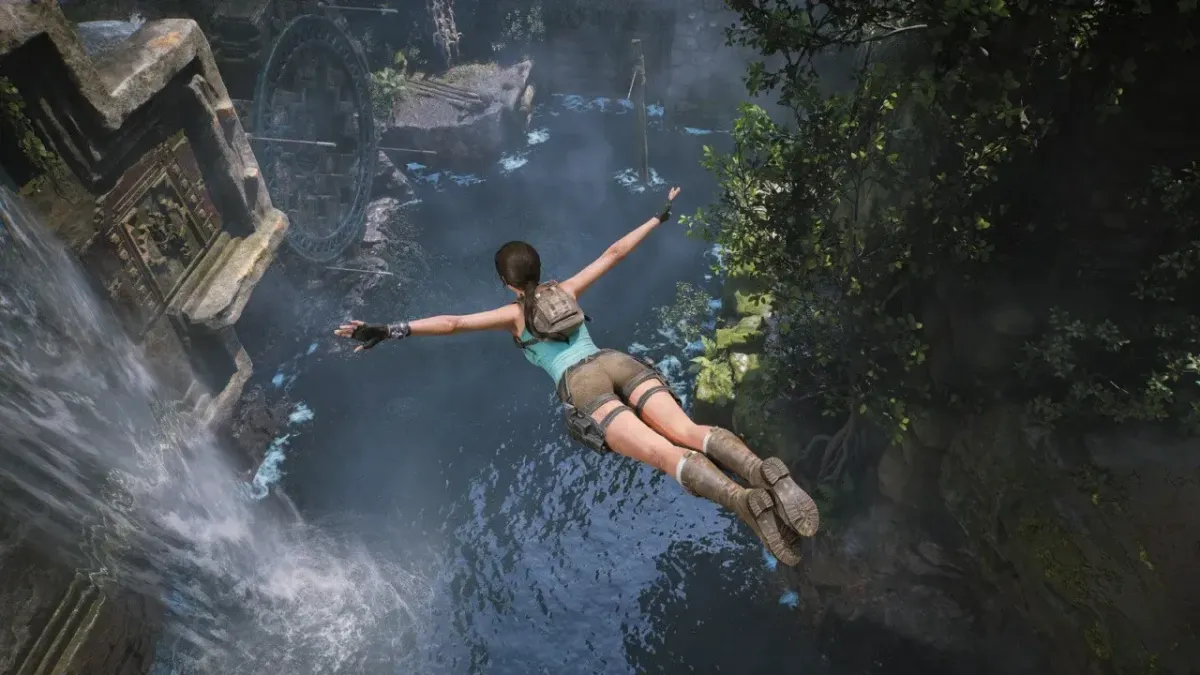
Tomb Raider: Legacy of Atlantis had already attracted attention after its Steam page disclosed the use of generative AI-assisted tools.
In response, developer Crystal Dynamics has taken the increasingly familiar route of stressing that AI was only used early in the development process, while the finished game remains human-created.
Experience director Jeff Adams described a practical and limited use case. During early-level development, the team might have an idea for an object but not know whether it is worth building out properly. Rather than spending production time creating a polished version, generative AI can be used to visualize the object in the world.
If it works, it then moves into the traditional pipeline, where the team concepts and builds it properly by hand. Adams also emphasized that the final game will be “human-crafted.”
There is nothing especially alarming about this. In fact, it sounds exactly like the sort of low-risk, high-efficiency use case that game studios should be embracing more aggressively. Early prototyping is one of the strongest arguments for generative AI in games. It lets teams test more ideas, reject bad ones faster, and reduce the amount of wasted human effort spent building things that may never make sense in context.
Yet the public language remains defensive. AI is framed as temporary scaffolding, never as part of the creative architecture. The studio is effectively saying: don’t worry, this is only for visualization; don’t worry, humans still make the final content; don’t worry, this is not replacing artists. That may be necessary PR, but it also shows how constrained the public conversation around AI in games has become.
Crystal Dynamics is not alone. Capcom has similarly said it will not implement AI-generated assets into final game content, while still exploring AI to improve efficiency across areas such as graphics, sound and programming. Sega has taken a related line around Crazy Taxi: World Tour, describing generative AI as a support or reference tool rather than finished asset production.
This is now the safe corporate formulation: AI can help in pre-production, ideation, reference and workflow, but final authored content must still be presented as fully human-made.
The use case is sensible, but cautious. The company is not claiming AI will help it build larger worlds, simulate more reactive environments, improve iteration speed across whole teams, or create richer forms of interactive storytelling. It is saying AI can help the team decide whether to build an object.
That is useful, but it is unambitious.
Still, the story is valuable because it shows how game companies are trying to thread the needle. Internally, AI is becoming a normal development tool. Publicly, studios still feel pressure to describe it as peripheral, temporary and safely removed from the final creative product.
That tension is now one of the most important AI stories in games. The industry is not rejecting generative AI. It is adopting it while trying to reassure audiences that nothing fundamental is changing. But something is changing. Even when AI is used only at the prototype stage, it can influence what gets built, what gets discarded, and how quickly teams move from idea to implementation.
The stronger argument is not that AI removes human creativity. It is that AI gives human teams more attempts, more options, and more speed. The frustrating thing is that game companies still seem nervous about saying so.