What does Epic's UE6 announcement say about AI?
Epic Games says AI will be an integral part of Unreal Engine 6.


Epic’s Road to Unreal Engine 6 post confirms something that has been becoming clearer across the games industry. AI is no longer being treated as a novelty feature or a speculative production shortcut.
In Epic’s framing, it is becoming part of the development substrate itself.
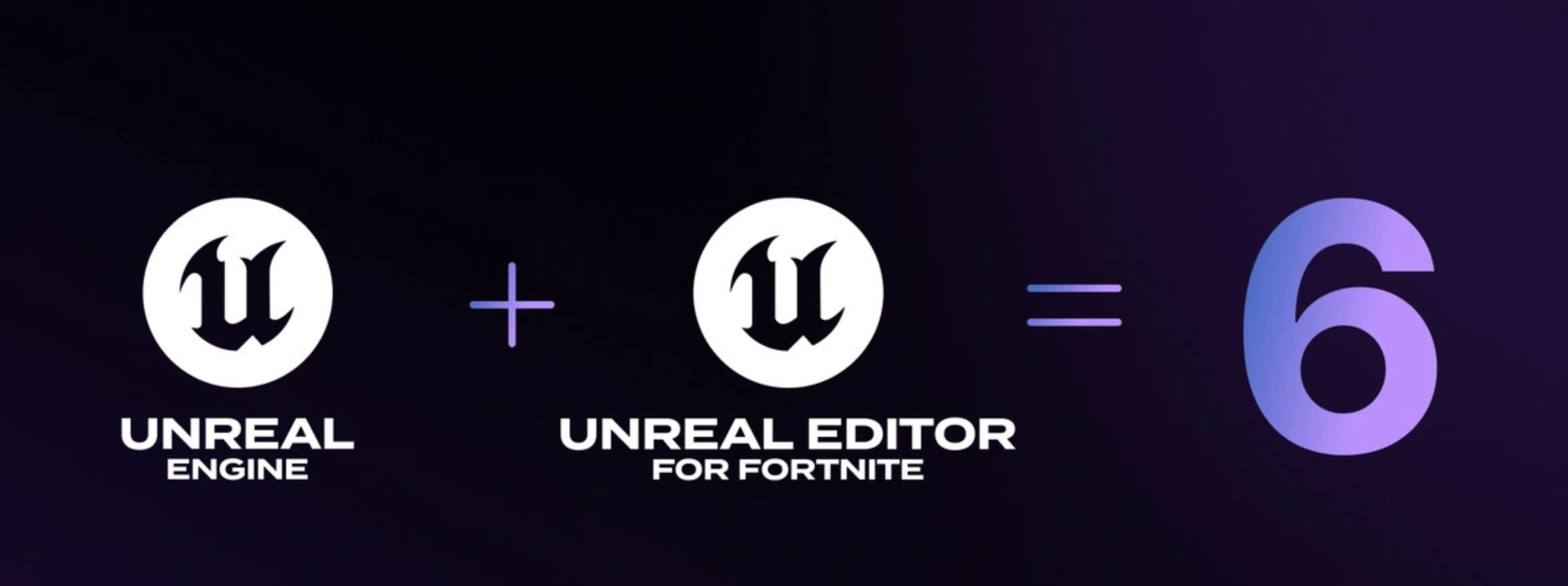
The company’s UE6 announcement is not just a conventional engine roadmap. Epic says UE6 is being built around three linked initiatives.
- The first is the move toward Verse as the platform's future gameplay programming model, building on the work already done inside Unreal Editor for Fortnite.
- The second is portability: content, code and economies that can move more easily across games, engines and ecosystems.
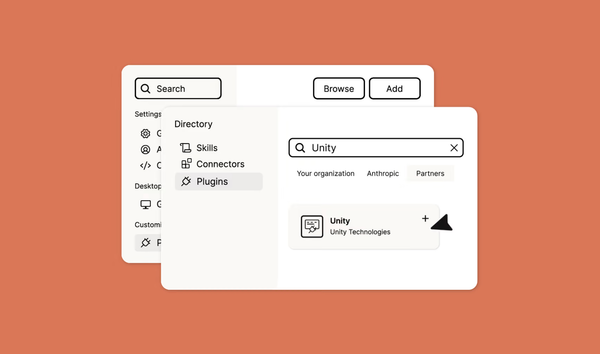
- The third is AI-assisted development, with Epic exposing engine capabilities through Model Context Protocol (MCP) integrations so developers can connect tools such as Claude, Gemini and other models directly into Unreal workflows.
In the case of the latter, Epic is not saying that Unreal Engine will get an AI chatbot. It is saying that Unreal Engine 6 will be designed so AI systems can understand and operate within the engine’s own structures.
A generic assistant can answer documentation questions or write snippets of code, but a model-connected engine can potentially inspect a project, understand its scene hierarchy, manipulate assets, adjust workflows and reduce the amount of manual connective tissue required to turn creative intent into a working game.
Epic gives practical examples rather than promising a magical text-to-game button. It talks about tightening iteration loops and reducing the tedious setup work involved in setting up levels, character rigs, particle systems, skinning weights and lighting.
In other words, the focus is not replacing creative decisions, but compressing the labor between decision and result. That is where AI currently looks most useful in professional development: not as a source of taste, but as a way of making complex production environments more responsive.
Developers will also be able to bring their own preferred models. Epic is not trying to make Unreal dependent on one proprietary model controlled by Epic. Instead, it wants Unreal to become the structured environment into which different models can be plugged. The engine remains the runtime, the toolchain and the authority. The AI becomes an operator within that system.
This also explains why Epic continues to develop its own Epic Developer Assistant (EDA). The assistant started around UEFN and has expanded to Unreal Engine documentation queries and C++ code generation, with plans to bring it more directly into the editor.
In UE6, Epic describes it as an optional turnkey solution. That gives Epic a default AI layer for developers who want one, while keeping the broader architecture open enough for teams using Claude, Gemini, Codex or custom internal models.
The internal-use detail is equally significant. Epic says it has opened up broad usage of code generation and AI analysis across its backend, engine and game development engineering teams. The successes it lists are revealing: custom tools, fast code-indexing systems for large codebases, incident response analysis, root-cause crash analysis, CI job failure analysis, automated test generation and backend service acceleration.
Epic explicitly notes that most of these use cases are not generating mainline Unreal Engine code.
That is a sober claim, and probably a more useful one. It suggests Epic’s AI strategy is being shaped by the kinds of tasks large engineering organizations actually need help with - navigating codebases, debugging failures, improving tooling, generating tests and accelerating peripheral services. These are not glamorous use cases, but they are exactly the sort of work that slows teams down.
For developers, the implied promise of UE6 is not that the model will make the game. It is that the engine will become more legible to models, and therefore more fluid for humans.
That also puts Epic’s announcement into a wider pattern across game development. The industry’s public conversation about AI is still dominated by the most emotionally charged question: are developers using generative AI to make art, voices, music, characters or finished assets?
But the actual production use of AI is often more mundane, more internal and less visible.
This mismatch is becoming one of the defining features of the current AI debate in games. Developers increasingly use AI around the work, while talking very carefully about whether they use it inside the creative bloodstream.
Fumito Ueda’s recent comments are a good example. His studio uses AI for scheduling, meeting notes and learning how to use tools, but he draws a hard line around “game development” itself, which he says remains human-made. That is a familiar formulation: AI for project management, administration and reference; humans for the game.
Other companies are making similar distinctions. Capcom has talked about using AI to improve efficiency while rejecting AI-generated assets in final game content. Sega has discussed AI as a reference tool. Neowiz can hire for AI-related R&D while insisting it is not directly shaping the current Lies of P sequel. Even when studios are experimenting, the public language tends to emphasize distance from final assets and authorial control.
That is not necessarily hypocrisy. It reflects a real split in the technology’s usefulness and a split in audience tolerance. Players are far more likely to object to AI-generated art, voice, or narrative content than to AI being used for crash analysis, build pipelines, test generation, or meeting summaries; use cases that are also not obvious to external scrutiny.
Developers know this. So the public discourse becomes defensive around content, while the operational adoption continues behind the scenes.
Epic’s UE6 framing is interesting because it avoids some of that trap. It does not present AI as “slop generation” or as a replacement for developers. It presents AI as a production multiplier inside a highly structured environment.
This is closer to the serious version of the AI argument: games are not just collections of images and text. They are vast interactive systems, full of dependencies, constraints, performance requirements and platform obligations. AI becomes useful when it can operate within those constraints, not when it simply generates material outside them.
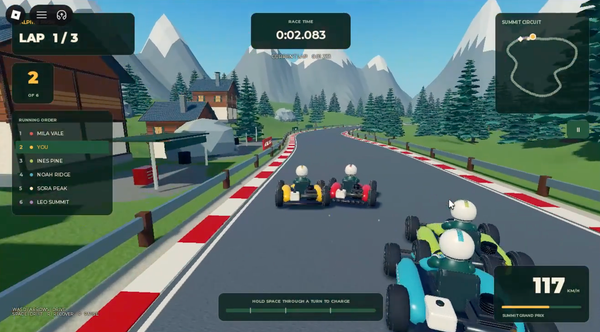
Roblox has been moving in a similar direction with AI-assisted creation tools. The common thread is that creation platforms are trying to make themselves more operable by AI. The model is not enough. The value sits in the environment, the constraints, the asset libraries, the templates, the publishing layer, the economy and the audience.
That is why UE6’s AI direction feels more important than a single assistant feature. Epic is building for a world in which developers increasingly expect to delegate low-level production friction to models, but still need a controlled professional pipeline. The engine becomes the mediator between human intent, AI execution and runtime performance.
But the uncomfortable conclusion is that the games industry’s anti-AI discourse and its internal AI adoption are likely to keep diverging.
Publicly, companies will keep saying that final creative output is human-made. Internally, they will use AI wherever it saves time, reduces friction and does not trigger player backlash.
Epic’s announcement makes that split easier to see. UE6 is not promising AI-made games. It is preparing Unreal for AI-assisted teams.