What the C&C Zero Hour iOS port actually tells us about AI coding
A Google designer used Claude Fable 5 to bring Command & Conquer: Generals Zero Hour to iPhone in 40 minutes.

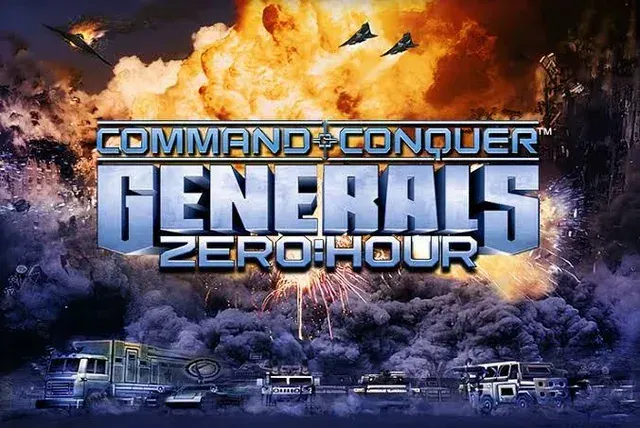
The headline writes itself: a Google designer used Anthropic's Claude Fable 5 to port Command & Conquer: Generals – Zero Hour, a 2003 Windows RTS, natively to iPhone, iPad, and Apple Silicon Macs.
This included full campaigns, skirmishes, touch controls, no emulator.
The first working build reportedly took around 40 minutes. It's a great story, and it's mostly true, but the headline version skips two layers of groundwork that change what it actually demonstrates about AI coding.
To be clear, this is not AI reverse-engineering a closed, twenty-year-old binary from scratch. Such a sci-fi version of the story would represent a genuine leap in automated decompilation. That capability doesn't exist yet, and this project isn't evidence that it does.
What actually happened runs through three layers, and Fable 5 only did the last one.
The first is that EA released the Generals/Zero Hour engine source under GPLv3, the same move it made with Red Alert and Tiberian Dawn a few years earlier. Without that decision, none of this is legally possible, let alone technically fast — it's the load-bearing fact underneath the whole story, and the one most coverage buries or skips.
The second layer is GeneralsX, a pre-existing community engine project built on that released source. GeneralsX had already solved the genuinely hard problem: getting a 2003 Direct3D8, Win32-native codebase to build on modern, non-Windows targets, using DXVK-style translation to convert the original graphics calls to Vulkan.
The third layer is what Google AI Studio designer Ammaar Reshi actually built with Fable 5's help: extending GeneralsX specifically to Apple's stack. That meant adapting the graphics translation path toward Metal and Apple Silicon rather than Vulkan-on-Linux, building Xcode and CMake project structures for iOS and iPadOS targets that never existed before, and writing a genuinely new touch-input layer. The original game only ever had mouse-and-keyboard input. That last piece is real new code, not a recompile. Everything else was already there.
Framed that way, this is a much narrower and more useful demonstration than "AI ported a classic game," and it points at exactly why coding agents are good at this specific job.
Porting has a built-in verification signal that most software tasks lack: code either compiles or it doesn't, and every fix is immediately checkable by running the build again.
That tight loop — write, compile, read the error, fix, repeat, at a pace no human matches — is precisely what agentic tools like Claude Code are built to exploit.
The project's own stated limitation is the clearest evidence of where that strength runs out. Multiplayer doesn't work, attributed to "engine limitations."
Networking and determinism code tends to be deeply interdependent and timing-sensitive in a way that resists clean local substitution. You can't translate lockstep netcode the way you translate a graphics call, because there's no equivalent one-to-one mapping and no simple compiler error to chase. That's exactly the kind of problem that doesn't decompose the way a graphics API port does, and it's the part that didn't yield to the same approach."
So the accurate takeaway isn't "AI can now port any legacy game to any platform." It's narrower and, for anyone actually planning engineering work around these tools, more useful.
Current AI coding agents are close to excellent at retargeting an already-open, already-partially-cross-platform codebase to a sibling platform with a well-documented API and prior translation patterns to follow.
That's a valuable capability, but it's not (yet) evidence AI can reverse-engineer undocumented software, solve problems without a compiler-checkable signal, or replace the human iteration that makes a port not just functional, but good to play.