Why trust GDC’s 2026 report when it didn’t include Claude Code?

GDC's 2026 State of the Game Industry report contains plenty of data. It surveyed more than 2,300 professionals and tried to broaden its reach beyond developers to include marketers, executives, investors and educators.
But the most revealing thing about the report, especially when it comes to its oft-quoted AI section, may not be one of its headline charts. It is a small admission buried in the tooling breakdown: several respondents wrote in Claude Code because it was not included in the survey's list of AI tools.
For the record, Claude Code was originally released in February 2025 as a research preview, gaining a full launch in May 2025, with Claude Opus 4.5 being released in November 2025.
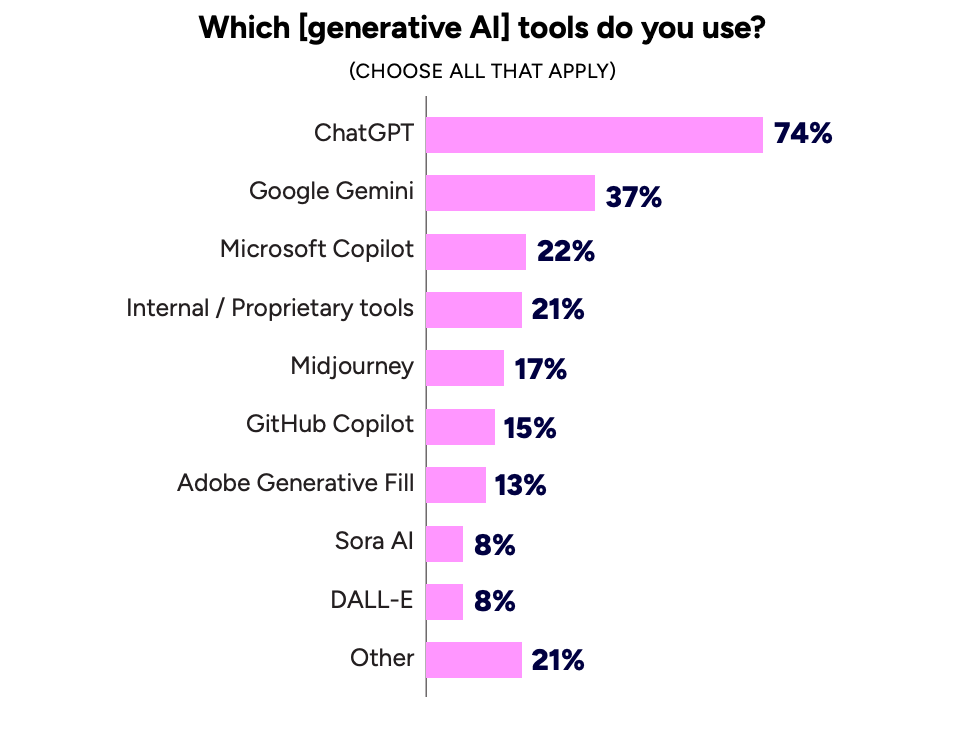
This matters because omissions are rarely neutral. If you are trying to measure how game professionals are using AI in 2026, failing to include one of the most important coding-native tools on the market tells us something about the experise of the people designing the questionnaire.
It suggests GDC is tracking AI mostly as a broad workplace phenomenon — ChatGPT, Gemini, Copilot, Midjourney, internal tools — rather than as a fast-moving set of development workflows, especially agentic coding workflows, that are beginning to reshape how software is made. The report's tool list feels game management, not game development.
This mismatch also helps explain what kind of sample this really is. GDC says developers are still its "bread and butter," and the top respondent groups were game design, programming, visual and technical arts, and production. The sample remains disproportionately US-based and Western European, with 54% of respondents in the United States, 64% men, and 55% having attended GDC at least once in the last decade. Over half had less than 10 years' experience.
It is a snapshot of a specific slice of gaming's profession.
Read the AI numbers through that lens and they make more sense. Only 36% say they use generative AI as part of their job, while 52% say it is having a negative impact on the industry. Usage is much higher in publishing, support, marketing and business roles than in game studios proper, and management uses these tools more. Meanwhile, the strongest hostility comes from visual arts, design and programming.
This is not just a disagreement over technology. It is a social divide between the people selling AI's efficiency case and the people most likely to feel its pressure on craft, employment and identity.
The same framing appears elsewhere. Roblox and UEFN are treated as fringe "UGC tools," with the report stressing that they do not often intersect with "traditional game development". That's an extraordinary thing to say in an era when millions of young creators are learning to build inside those ecosystems. It reveals an institutional definition of legitimacy: professional games are still primarily what studios make, what GDC attendees discuss, and what legacy development categories can comfortably measure.
The report's focus on other issues, such as unions and DEI, also suggests an effort with a thumb firmly on the scales to generate the sorts of results it thinks are important.
But back to AI. The problem with Claude Code's omission is not that one product was missed. It's that it exposes the report's hollow center of gravity.
GDC's 2026 survey is useful, but it's best understood as a report about the past; with littel to say about where game development is heading in 2026 and beyond.