Updated: Unreal and Unity are integrating AI. Godot is just trying to manage its externalities
For open source game Godot, AI is currently more of a cost than an opportunity.

Update: On 30th June, the Godot maintainers formalized new contribution rules aimed squarely at the flood of low-quality, AI-generated pull requests that had been piling up in the review queue.
Under the new policy, contributors with three or fewer merged PRs to their name can now only submit bug fixes or documentation — nothing structural, nothing that touches core systems — without prior approval. Anything more substantial has to be human-authored, with any AI assistance disclosed up front.
While Unreal and Unity are turning AI into a native part of their development stacks, Godot is facing the opposite problem: how to manage the externalities it creates.
The difference starts with what Godot is. Unlike Unreal or Unity, Godot is not a commercial engine controlled by a single platform company. It is an open-source game engine, distributed under the permissive MIT license, and developed through a public contribution process. Anyone can inspect the source code, fork it, modify it, and submit changes back to the project.
This openness is one of Godot’s great strengths. It gives developers more control, avoids vendor lock-in, and makes the engine especially attractive to indies, educators, hobbyists, and studios wary of commercial platform dependency.
But it also means Godot depends heavily on maintainers reviewing outside contributions. Every pull request has to be assessed by humans who understand the engine, its architecture, its compatibility constraints, and its long-term direction.
And this is where AI automation creates the problems.
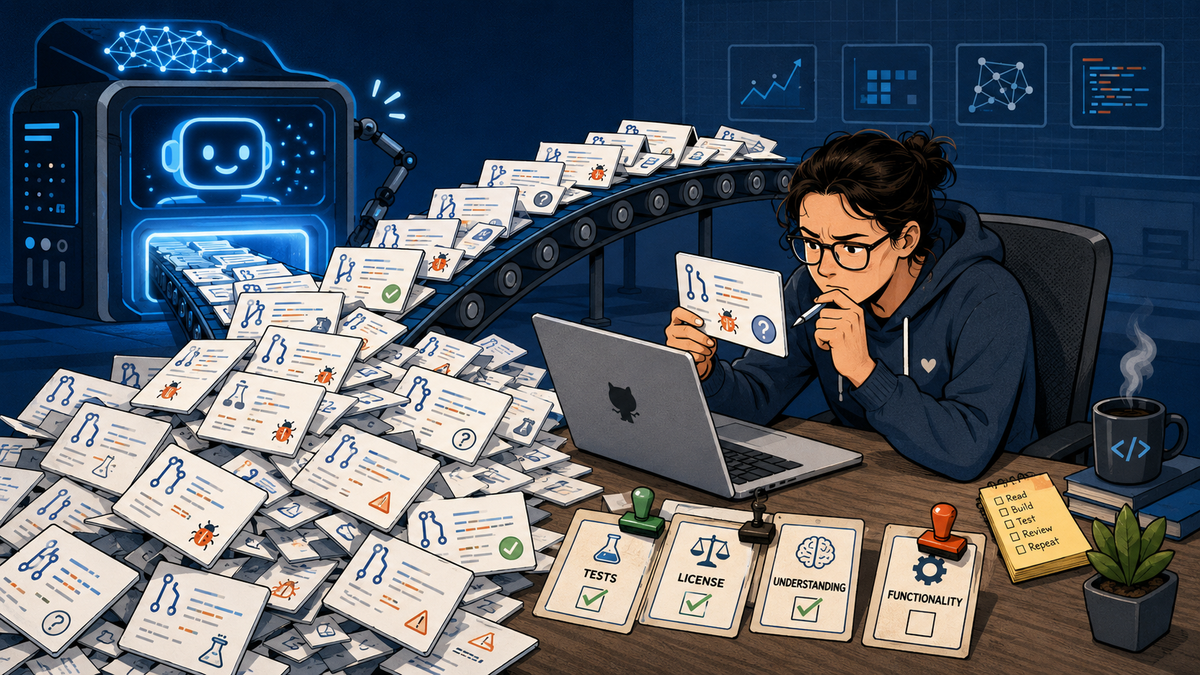
AI makes it easy to generate code, documentation, bug fixes, or speculative improvements to Godot. But for an open-source maintainer, all that output is a cost. Someone has to read it, test it, understand whether it solves a real problem, check whether the contributor understands their own change, and decide whether the code is legally and technically acceptable.
Godot’s current pull request guidelines reflect this reality. They do not ban developers from using AI with Godot to build games. They are about contributions to Godot itself. The project says AI-assisted contributions are discouraged, fully AI-made contributions are prohibited, and any AI use must be disclosed. Contributors are also expected to understand and explain the code they submit.
The contrast is with game companies such as Unity and Epic. Unity now promotes Unity AI, including an assistant, AI Gateway and MCP Server. Epic has been talking about exposing Unreal Engine capabilities through MCP as part of the road to UE6.
In those cases, AI is part of the platform strategy. Godot has no obvious official MCP strategy at this stage. That is not surprising. Its immediate AI problem is not building an agentic development layer around the engine. It is protecting the integrity of an open-source project from a flood of low-quality, low-accountability submissions.
So the story is not that Godot is anti-AI while Unreal and Unity are pro-AI. It is that AI lands differently depending on the structure of the tool.
In commercial engines, AI can be packaged as productivity. In open source, it can arrive first as review burden, provenance risk, and maintainer exhaustion.
That makes Godot an important counterpoint to the industry’s AI optimism. AI may help developers make more things faster. But someone still has to decide whether those things are good, useful, legal, and worth maintaining.